What You’ll Learn in This Article
- Entrance fees and key differences between Dogo Onsen Honkan, Asuka no Yu, and Tsubaki no Yu
- How to get to Dogo Onsen from Matsuyama Station and Matsuyama Airport
- Nearby sights including Isaniwa Shrine and Dogo Park
- Street food to try in Dogo, including the famous Botchan Dango
- Best times to visit and tips for avoiding the crowds
What Is Dogo Onsen? Japan’s Oldest Hot Spring and Its Historic Bathhouse
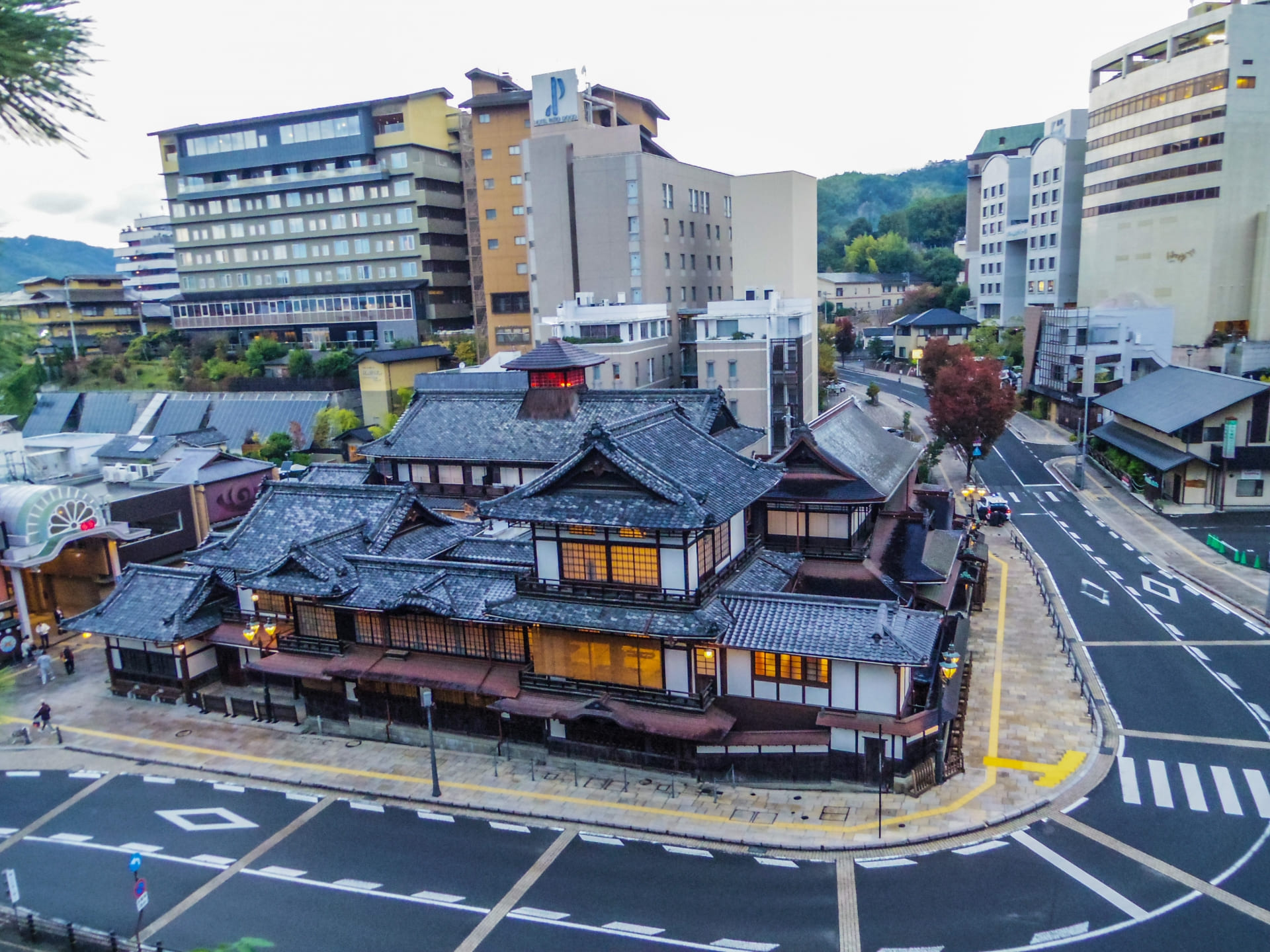
Dogo Onsen in Matsuyama, Ehime Prefecture, is one of Japan’s oldest hot spring resorts, with records dating back to the Kojiki and Man’yoshu — ancient chronicles compiled over 1,300 years ago. The main bathhouse (Honkan), built in 1894 as a three-story wooden structure, is a designated Important Cultural Property and still operates as a public bath today.
Looking up at the Shinrokaku (the white heron tower) on the roof, you feel the weight of Meiji-era craftsmanship alongside a glimpse of Japan’s modernization period. Step inside and the warmth of steam mingles with the scent of aged wood — an atmosphere that feels unchanged from over a century ago.
Following a large-scale preservation project that began in 2019, the Honkan fully reopened in July 2024. A newly added private room on the third floor now offers close-up views of the Shinrokaku, making the renovated bathhouse more complete than ever.
Info
The four buildings of Dogo Onsen Honkan — including the Kami no Yu main hall and the Yushinden imperial bath hall — were designated Important Cultural Properties in 1994. It holds the distinction of being Japan’s first actively operating public bathhouse to receive this designation.
Comparing the 3 Bathhouses: Honkan, Asuka no Yu, and Tsubaki no Yu
Dogo Onsen has three bathhouses with distinct personalities. Choose Honkan for historic architecture, Asuka no Yu for an open-air bath and cultural immersion, or Tsubaki no Yu for a casual local sento (public bath) experience.
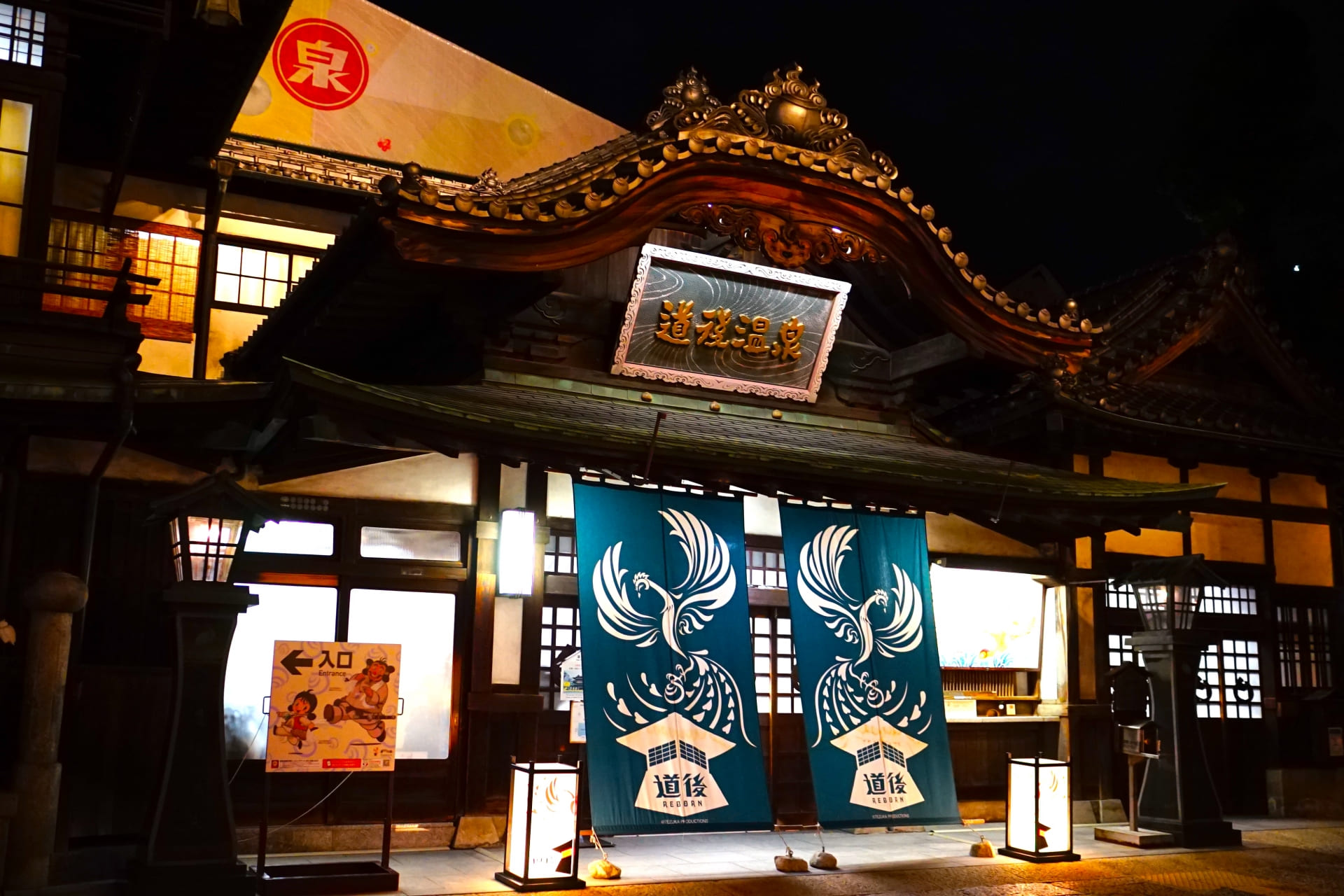
Dogo Onsen Honkan — Bathing Inside a National Cultural Property
The Honkan features two types of baths — Kami no Yu (Bath of the Gods) and Tama no Yu (Bath of the Spirits) — with the experience varying significantly by plan. Don’t miss Yushinden, Japan’s only imperial bathing chamber, available to view by advance reservation.
| Plan | Adult | Child | Includes |
|---|---|---|---|
| Kami no Yu – Ground Floor | ¥700 (approx. USD 5) | ¥350 | Bath only |
| Kami no Yu – 2F Lounge | ¥1,300 (approx. USD 9) | ¥650 | Bath + rental yukata + tea & sweets (60 min) |
| Tama no Yu – 2F Lounge | ¥2,000 (approx. USD 14) | ¥1,000 | Both baths + rental yukata, towel & bath towel + tea & sweets + Yushinden viewing (60 min) |
| Tama no Yu – 3F Private Room | ¥2,500 (approx. USD 17) | ¥1,250 | All of Tama no Yu 2F Lounge + private room (90 min) |
| Yushinden Viewing Only | ¥500 (approx. USD 3) | — | No bathing |
Point
Open daily 6:00–23:00 (last entry 22:30). Yushinden and the new private rooms can be reserved up to 90 days in advance via the official website — book early during peak seasons as slots fill quickly.
Asuka no Yu — Open-Air Bath and Cultural Immersion
Opened in 2017, Asuka no Yu is a newer bathhouse inspired by the architecture of Japan’s Asuka period (538–710 CE). It features an open-air bath not found at Honkan, and a special second-floor bath where guests can soak while wearing a yuchou — a reproduction of ancient Japanese bathing robes.
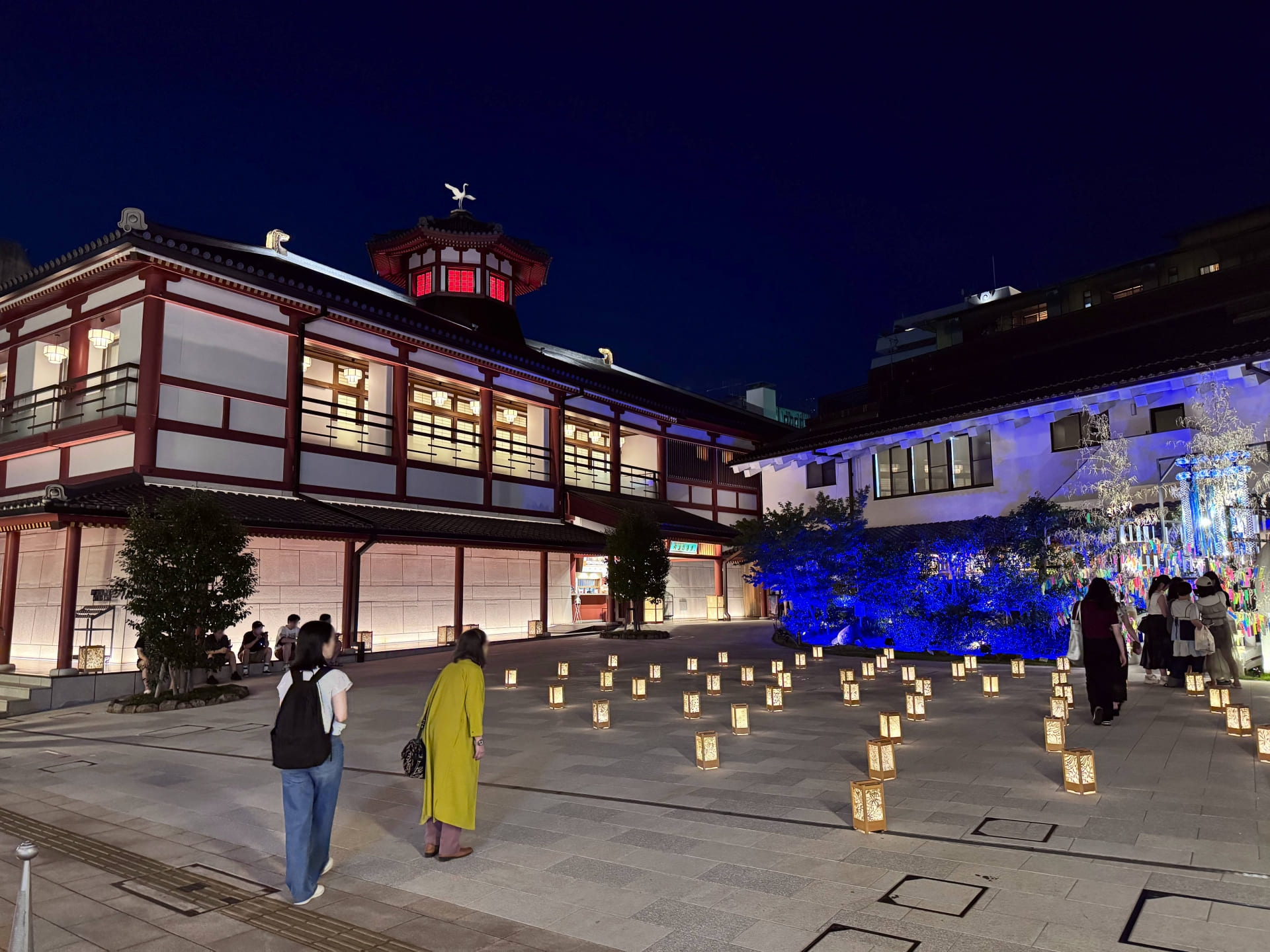
The interior blends Ehime’s traditional crafts with contemporary art, giving the bathhouse the atmosphere of a small gallery. A large tatami rest room (approximately 60 tatami mats) is ideal for relaxing after your soak.
| Plan | Adult | Child | Includes |
|---|---|---|---|
| 1F Bath Only | ¥610 (approx. USD 4) | ¥300 | Bath + open-air bath |
| 1F Bath + 2F Rest Room | ¥1,280 (approx. USD 9) | ¥630 | Bath + large tatami rest room + tea service |
| 1F Bath + 2F Private Room | ¥1,690 (approx. USD 12) | ¥830 | Bath + private rest room |
| 2F Special Bath (Private Family Bath) | ¥2,040/group + ¥1,690/adult (approx. USD 14 + USD 12) | ¥830/person | Yuchou cultural bathing experience (reservation required) |
Tsubaki no Yu — A Neighborhood Sento in the Middle of Dogo
Located in the center of Dogo Haikara-dori shopping street, Tsubaki no Yu is a classic public bath (sento) used daily by local residents. At ¥450 (approx. USD 3) for adults and ¥150 for children, it’s the most affordable of the three, with a granite bathtub where you can enjoy the pure Dogo waters without any frills.
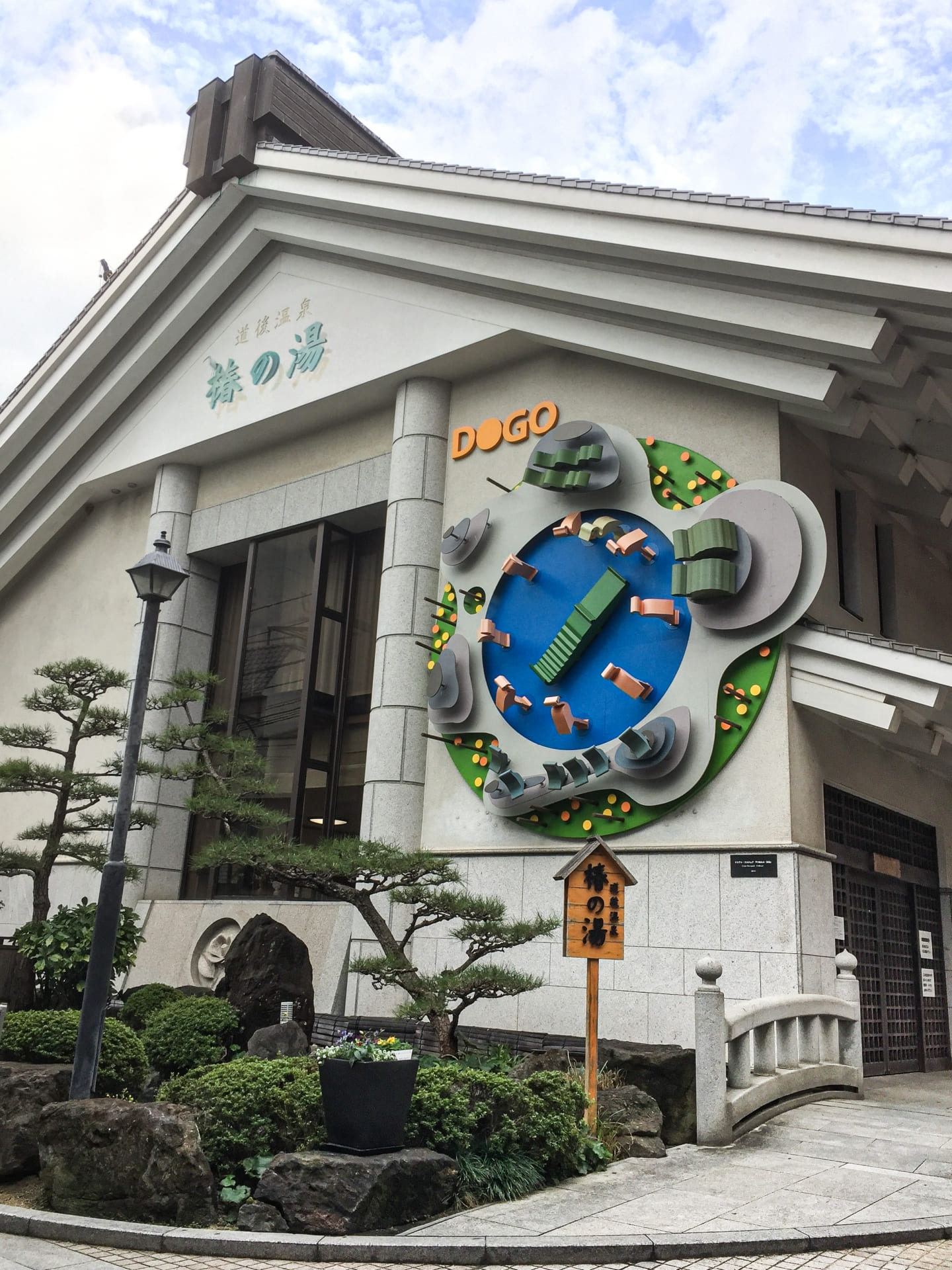
The storehouse-style exterior feels quieter and more understated compared to the bustle of the shopping arcade around it. Open 6:30–23:00 (last entry 22:30). Regular closing day: (to be verified).
Getting There — From Matsuyama City and the Airport
The easiest way to reach Dogo Onsen is by Iyotetsu tram (streetcar). Dogo Onsen is the terminal stop, so you can ride directly from central Matsuyama without transfers. A direct limousine bus also connects Matsuyama Airport.
From the City: Iyotetsu Tram
Trams run approximately every 15 minutes during the day. Since Dogo Onsen is the terminal stop, you board at JR Matsuyama Station or Matsuyama-shi Station and ride straight through — no transfers needed.
| From | Duration | Fare (IC card) |
|---|---|---|
| JR Matsuyama Station | Approx. 25 min | ¥230 (IC: ¥210 / approx. USD 1.50) |
| Matsuyama-shi Station | Approx. 20 min | ¥230 (IC: ¥210 / approx. USD 1.50) |
From Matsuyama Airport: Limousine Bus
Iyotetsu runs a direct airport limousine bus to Dogo Onsen Station — no reservation required. It runs on a first-come, first-served basis, making it a convenient option if you’re arriving with luggage and heading straight to Dogo.
| Option | Duration | Adult Fare |
|---|---|---|
| Airport Limousine Bus | Approx. 43 min | ¥1,200 (IC: ¥1,180 / approx. USD 8) |
| Taxi | Approx. 30 min | ¥3,000–4,000 approx. (to be verified) |
Nearby Sights
Several worthwhile spots are within walking distance of Dogo Onsen, making it easy to turn a post-bath stroll into a full afternoon of sightseeing — from a shrine reached by 135 stone steps to a castle ruin park with free admission.
Isaniwa Shrine (Isaniwa Jinja)
A few minutes’ walk from Dogo Onsen Honkan, Isaniwa Shrine sits at the top of 135 stone steps and has served as Dogo’s guardian shrine for over 1,000 years. Its main hall is an Important Cultural Property and one of Japan’s three finest examples of Hachimantsukuri architecture.
Gold-leaf columns and intricate woodcarvings make a strong impression. Reaching the top of the steps, the quiet of the grounds and the deep-red tower gate open up before you — a contrast to the lively shopping street below. The shrine is also known for blessings related to love and academic success.
Dogo Park (Yuzuki Castle Ruins)
The ruins of Yuzuki Castle — built by the Kono clan, medieval lords of Iyo Province — have been preserved as a national historic site park. Listed on Japan’s 100 Famous Castles and 100 Best Historic Parks, admission to the grounds is free (the history museum inside charges separately — to be verified).
Cherry blossoms in spring, water lilies in summer, and autumn foliage give the park a different character each season. It’s about a 3–5 minute walk from Dogo Onsen Honkan (to be verified).
Dogo Haikara-dori Shopping Street
The roughly 250-meter (820 ft) covered arcade between Dogo Onsen Station and the Honkan is lined with around 60 shops and restaurants, many staying open until about 10 PM. It’s a relaxed place to wander — especially in yukata after a bath.
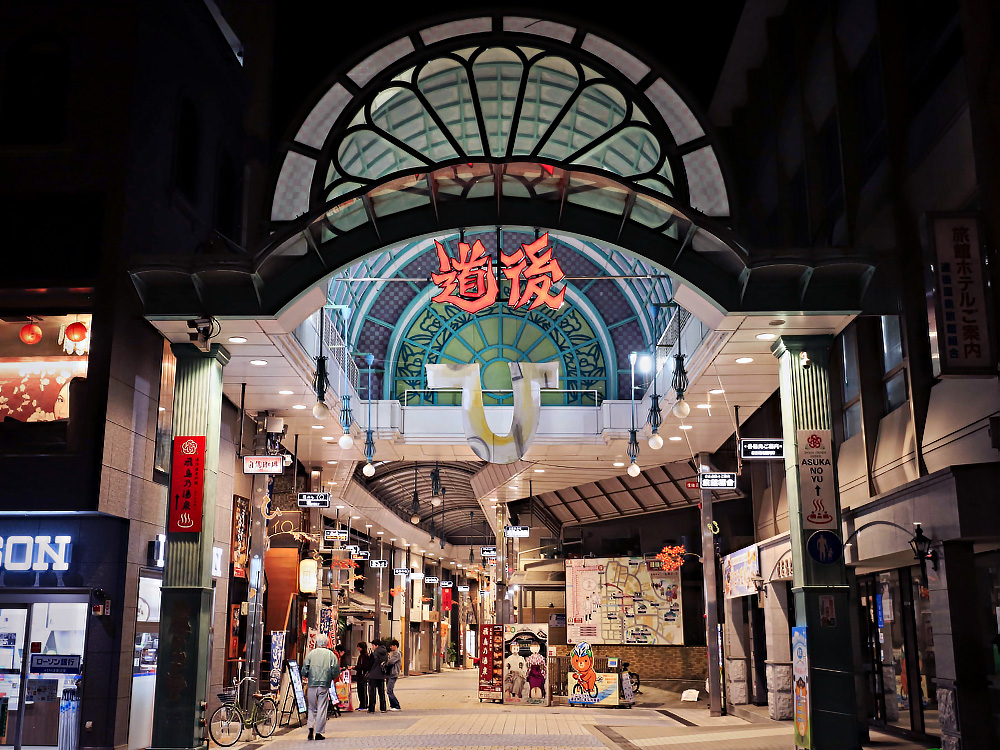
Shops selling Imabari towels and traditional Ehime crafts are scattered throughout the arcade. Strolling with a Botchan Dango in hand is the classic Dogo Onsen way to spend time between baths.
Street Food & Local Eats
The must-try snack at Dogo Onsen is Botchan Dango — tri-colored skewered rice dumplings made famous by Natsume Soseki’s novel Botchan (1906). You’ll find them at several shops along Haikara-dori.
The three dumplings are topped with sweet bean pastes in green (matcha), yellow (egg), and brown (red bean). Tsubo-ya Confectionery, in business since 1883 and considered the model for the sweet shop in Soseki’s novel, lets you eat in with tea.
- Botchan Dango (Tsubo-ya Confectionery): In business since 1883 — considered the original shop from Soseki’s novel
- Dogo Purin: A Taisho retro-style pudding shop; the signature flavor features a whole Ehime mandarin on top
- Jyako-ten: Deep-fried fish cake made fresh to order — Ehime’s classic street snack
- Mandarin Juice from the Faucet: At Aire no Shokutaku 1970, you can taste around 20 different mandarin varieties side by side
Where to Stay — Ryokan and Hotels in Dogo Onsen
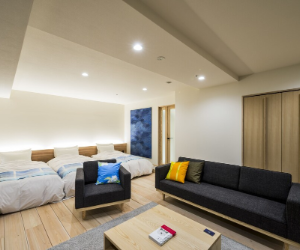
On a day trip, the wait at the Honkan can be the catch — but stay overnight and that worry largely disappears. Beyond your inn’s own bath, you can slip into the Honkan or Asuka no Yu during the quiet early-morning and late-evening hours. Dogo Onsen offers everything from traditional ryokan to boutique luxury hotels.
Recommended places to stay
- Dogo Onsen Funaya: Founded in the Kanei era (1620s), Dogo’s most historic inn — set in a 5,000 m² Japanese garden, where you can soak in the famous waters at your own pace, early morning and late evening.
- Yamatoya Honten: Established in 1868, an all-Japanese-room inn just a 1-minute walk from Dogo Onsen Honkan — an ideal base for bath-hopping.
- Seto Inland Sea Retreat Aonagi: A seven-room luxury retreat designed by architect Tadao Ando
- Dogo Onsen Chaharu: Located directly east of Honkan, with a private in-room bath fed from the Dogo source in every room — enjoy the spring water without the crowds.
Practical Tips
A few things worth knowing before you visit: when to come to avoid long waits, what to bring for your bath, and entry rules to be aware of.
Avoiding the Crowds
Golden Week (late April–early May), Obon (mid-August), and New Year are peak periods — two-hour waits at the Honkan are not unusual. Visiting on a weekday, arriving at opening (6:00 AM), or coming after 9 PM (to be verified) will significantly reduce waiting time.
Warning
Saturday and Sunday afternoons between 3–6 PM are the busiest window at the Honkan. Showing up then may mean a long wait. Aim for early morning or late evening instead.
What to Bring
Plans at 2F level and above at both Honkan and Asuka no Yu include a towel and rental yukata. If you choose the lowest-tier plans — Kami no Yu Ground Floor (¥700) or Asuka no Yu 1F Bath (¥610) — bring your own towel or purchase one on-site.
Warning
Guests with visible tattoos are not permitted to bathe at Dogo Onsen Honkan or Asuka no Yu (to be verified). Check the official websites for the latest policies before your visit.
Summary
Dogo Onsen offers three distinct bathhouses — the historic Honkan, the open-air Asuka no Yu, and the unpretentious Tsubaki no Yu — making it easy to match your visit to your budget and interests. Whether you have a few hours or a full overnight stay, there’s plenty to do in and around this Matsuyama landmark.
- Dogo Onsen Honkan: Historic Meiji-era bathhouse with Japan’s only imperial bath. From ¥700; fully reopened July 2024
- Asuka no Yu: Open-air bath and Asuka-period cultural experience. From ¥610; special bath requires advance reservation
- Tsubaki no Yu: The most casual option — a local sento at ¥450 for adults
- Easiest access by tram: approx. 25 min from JR Matsuyama Station for ¥230
- To avoid crowds, visit on a weekday, at 6 AM opening, or after 9 PM