What You’ll Learn in This Article
- The full route: islands, bridges, and distances along the 70 km cycling path
- Whether to start from Imabari (Ehime) or Onomichi (Hiroshima)
- Rental bike fees, pickup locations, and one-way return rules
- Beginner-friendly 1-day and 2-day itinerary options
- What to see on each island and how much to budget for the day
What Is the Shimanami Kaido? A 70 km Cycling Route Across the Seto Inland Sea
The Shimanami Kaido is a dedicated cycling and walking path connecting Onomichi (Hiroshima Prefecture) and Imabari (Ehime Prefecture) across nine islands and ten bridges — stretching roughly 70 km in total. It is widely recognized as one of the world’s great cycling routes.
The route runs parallel to the Nishiseto Expressway and is marked with a blue line painted along the roadway between bridges. Distance markers appear every 1 km, so navigating without a map is straightforward.
| Island | Main Bridge | Distance from Onomichi (approx.) |
|---|---|---|
| Mukaishima | Onomichi Bridge / Ferry | 3 km (1.9 mi) |
| Innoshima | Innoshima Bridge | 17 km (10.6 mi) |
| Ikuchijima | Ikuchi Bridge | 35 km (21.7 mi) |
| Omishima | Tatara Bridge | 47 km (29.2 mi) |
| Hakatajima | Omishima Bridge / Hakata-Oshima Bridge | 57 km (35.4 mi) |
| Oshima | Kurushima Kaikyo Bridge | 65 km (40.4 mi) |
| Imabari | — | 70 km (43.5 mi) |
Info
Each bridge approach involves a short uphill climb. Island roads in between are relatively flat, though the Miyakubo Pass on Oshima has a steeper grade.
Getting There: Should You Start from Imabari or Onomichi?
The choice depends on your travel itinerary. If you’re exploring Ehime or Shikoku, starting from Imabari is the natural choice. If you’re coming by Shinkansen from Osaka or Tokyo, Onomichi is the more convenient entry point.
Starting from Imabari (Great for Ehime / Shikoku Trips)
From Matsuyama, take the JR Limited Express Shiokaze to Imabari Station — about 40 minutes. This makes it easy to combine the cycling route with Dogo Onsen or Matsuyama Castle.
| Departure Point | Method | Travel Time | Approx. Fare |
|---|---|---|---|
| Matsuyama Station | JR Limited Express Shiokaze | 38–40 min | ¥1,800 (approx. USD 12) |
| Matsuyama Airport | Bus → Matsuyama Station → JR | approx. 70 min | ¥2,500 (approx. USD 17) |
A popular strategy is to rent a bike in Imabari, ride the full route to Onomichi, and return by bus or train. This one-way crossing avoids doubling back. If you’re planning a broader Ehime trip, the article on a 2-day Matsuyama and Dogo Onsen itinerary is also worth reading.
Starting from Onomichi (Easy Shinkansen Access)
The Shinkansen does not stop at Onomichi. Travelers on the Nozomi line should alight at Fukuyama Station, then switch to the JR Sanyo Line for approximately 15 minutes to reach Onomichi.
| Departure Point | Route | Travel Time |
|---|---|---|
| Tokyo Station | Shinkansen Nozomi → Fukuyama → JR Sanyo Line | approx. 3 hr 35 min |
| Osaka (Shin-Osaka) | Shinkansen Nozomi → Fukuyama → JR Sanyo Line | approx. 1 hr 30 min |
Rental Bikes: Fees, Pickup Locations, and One-Way Return Rules
The official rental service is operated by Shimanami Japan (一般社団法人しまなみジャパン), with 10 pickup and return stations between Imabari and Onomichi. You can rent at any station and return at any other.
| Bike Type | Daily Rate | Security Deposit | Notes |
|---|---|---|---|
| Standard geared bike | ¥3,000 (approx. USD 20) | ¥1,100 (refunded on return) | Most widely available |
| Electric-assist bike | ¥2,000–4,000 (to be verified) | ¥1,100 (refunded on return) | Recommended for hills and longer rides |
| Road / cross bike | Varies by shop (to be verified) | — | Available at Giant Store locations |
One-Way Returns and Drop-Off Fees
Shimanami Japan’s public rental bikes support one-way returns at no extra charge — return at any station along the route. Private operators like Giant Store charge an additional fee of ¥3,300 (approx. USD 22) for cross-route returns between Onomichi and Imabari.
- Shimanami Japan public rental: one-way returns accepted, no additional fee (to be verified — confirm current policy before booking)
- Giant Store: one-way return (Onomichi ↔ Imabari) requires an extra ¥3,300
- WAKKA drop-off service: allows returns at any location on an island (fee to be verified)
Warning
Electric-assist bikes tend to sell out by early morning during Golden Week and busy weekends. Arrive at your starting station before 9 AM during peak season, or call ahead to check availability.
Routes & Timing: 1-Day vs. 2-Day Plans
Covering the full 70 km takes a beginner roughly 10 hours of cycling. Two days is the recommended pace for most riders. For a single day, a partial out-and-back to Ikuchijima (35 km from Onomichi) is a realistic and enjoyable option.
| Plan | Distance | Estimated Time | Best For |
|---|---|---|---|
| 1-day partial (Onomichi → Ikuchijima, return) | approx. 35 km × 2 (round trip) | 6–8 hours | Beginners with moderate fitness |
| 1-day full crossing (Onomichi → Imabari or reverse) | approx. 70 km | 8–10 hours | Experienced cyclists |
| 2-day full crossing (overnight on Omishima) | Day 1: 37 km + Day 2: 33 km | 5–7 hours/day | Beginners & sightseers |
1-Day Route: Onomichi to Ikuchijima (approx. 35 km)
For a relaxed one-day ride, Ikuchijima — home to Kosanji Temple and lemon sweets — makes an ideal turnaround. Return to Onomichi by bus or ferry from the island (to be verified).
- Pick up a rental bike at the Onomichi Station rental terminal (from 9:00 AM)
- Take the short ferry or small boat to Mukaishima (approx. 10 min, ¥150–200)
- Cross Innoshima Bridge to Innoshima (approx. 17 km from Onomichi)
- Stop for lunch on Innoshima — try hassaku daifuku (rice cakes filled with citrus and white bean paste, a local specialty)
- Cross Ikuchi Bridge to Ikuchijima (approx. 18 km from Innoshima)
- Visit Kosanji Temple and stop at Shimanami Dolce for gelato
- Return rental bike at the Ikuchijima station and take bus or ferry back to Onomichi
2-Day Route: Imabari → Omishima → Onomichi (Full Crossing)
For a comfortable full crossing, spending the night on Omishima is the standard plan. Day 1 covers 37 km from Imabari to Omishima; Day 2 covers the remaining 33 km to Onomichi.
- [Day 1] Pick up a rental bike at Imabari Station terminal (from 9:00 AM)
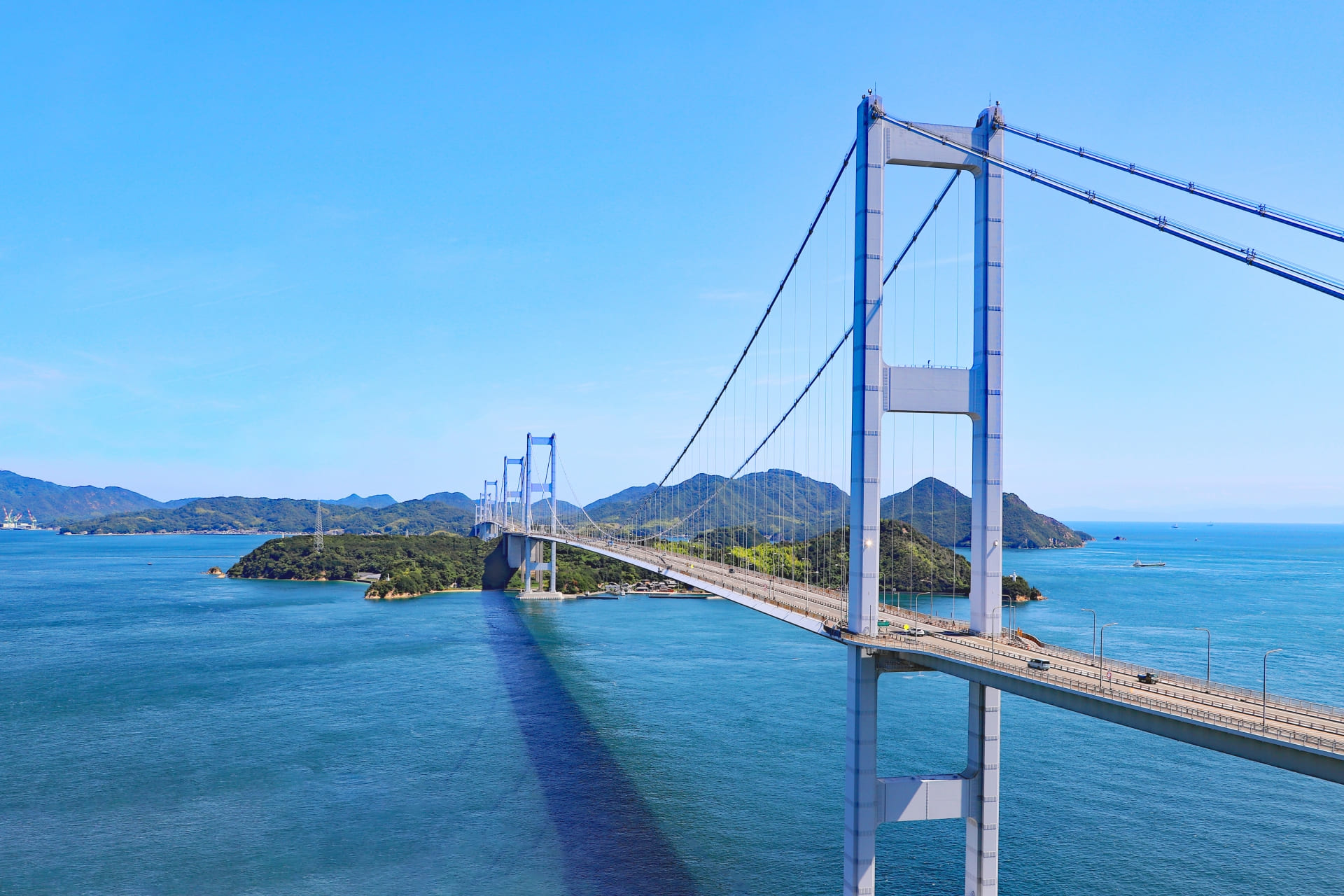
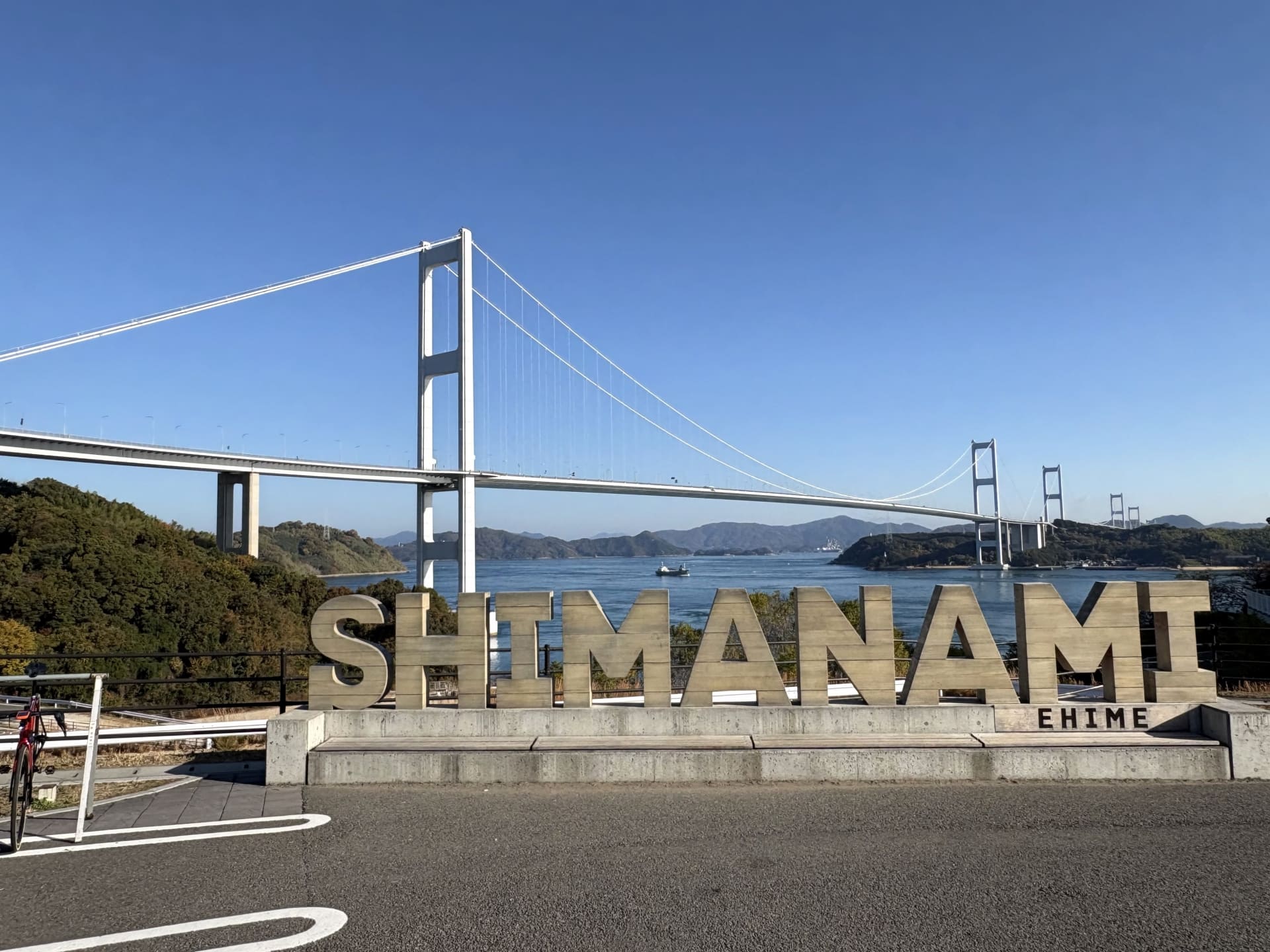
- Cross Kurushima Kaikyo Bridge — a triple suspension bridge stretching 4 km, one of the route’s most iconic views
- Detour to Kirosan Observatory Park on Oshima for a panoramic view of the bridge
- Pass through Hakatajima — grab a Hakata salt soft-serve ice cream
- Arrive on Omishima (approx. 37 km), visit Oyamazumi Shrine, and stay overnight
- [Day 2] Depart Omishima from 9:00 AM
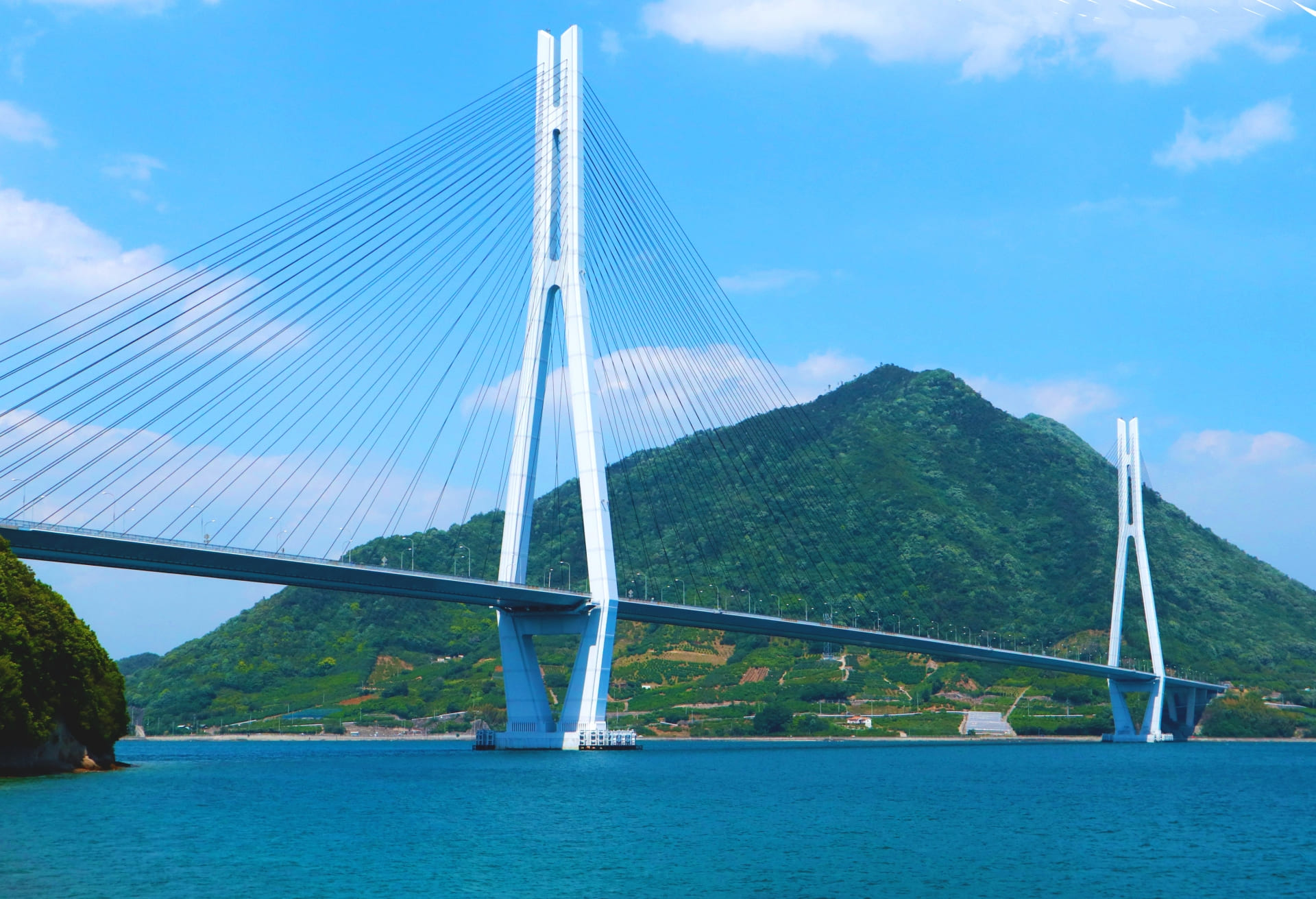
- Cross Tatara Bridge — a cable-stayed bridge marking the Hiroshima–Ehime border
- Stop on Ikuchijima and Innoshima before heading to Onomichi
- Arrive in Onomichi (approx. 33 km), return bike and explore the town
Point
Riding east from Imabari means tackling the Kurushima Kaikyo Bridge climb first — while your legs are fresh. If fitness is a concern, starting from Imabari is the smarter choice.
Island Highlights: What to See and Eat Along the Way
Each island has its own character. If time is limited, prioritize Ikuchijima for food and culture, or Omishima for history and rest.
Innoshima: The Island of the Sea Raiders
Innoshima was once the stronghold of the Murakami Suigun (Murakami Pirates) — the most powerful naval clan of medieval Japan. It is also the original home of the hassaku citrus fruit.
- Innoshima Suigun Castle: a small hilltop museum displaying armor, weapons, and documents from the Murakami Suigun era (admission fee, to be verified)
- Hassaku daifuku: a soft rice cake filled with sweet white bean paste and tart hassaku citrus — a must-try local souvenir
- Ohama Lighthouse: operating since 1894, with a lighthouse museum on site
Ikuchijima: Lemons, National Treasures, and Gelato
Japan’s domestic lemon industry has its roots on Ikuchijima. The island offers lemon-flavored food and sweets at every turn, plus one of the region’s finest cultural sites.
- Kosanji Temple: a striking white marble complex (admission fee, to be verified). The National Treasure three-story pagoda is at nearby Kojoji Temple and can be viewed from outside (to be verified)
- Shimanami Dolce: a gelato shop with 12 sherbet and 19 milk gelato flavors made from locally grown fruit — perfect for a mid-ride break
- Octopus and conger eel dishes: look for these along the Shiomachi shopping street
Omishima: The Largest Island and a Shrine With National Treasures
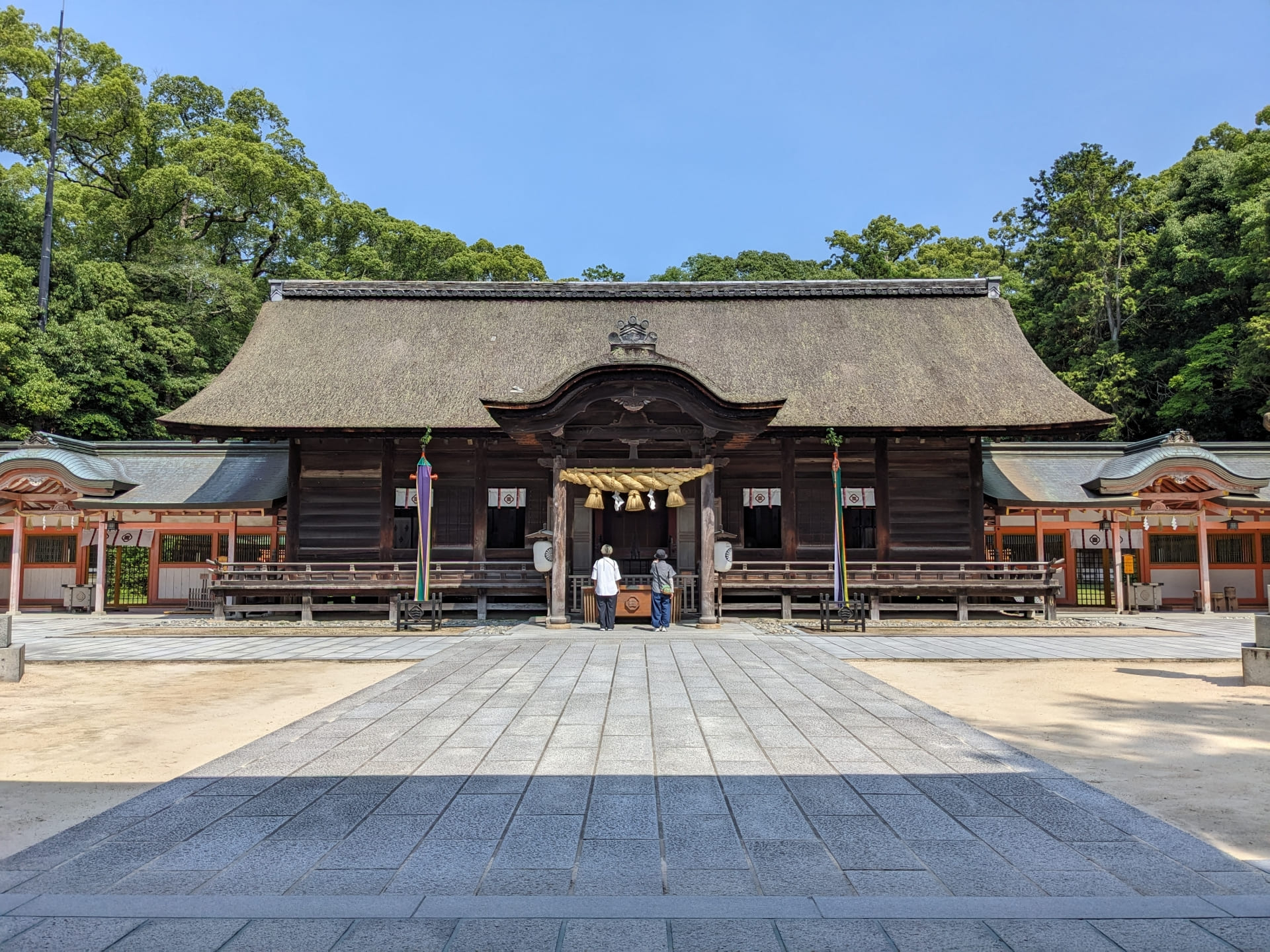
Omishima is the largest island on the Shimanami Kaido and the site of Oyamazumi Shrine, one of Japan’s oldest and most respected shrines. The adjacent rest area is an ideal refueling stop.
- Oyamazumi Shrine: dedicated to the gods of mountains, seas, and war; home to a 2,600-year-old camphor tree and a treasure house containing about 80% of Japan’s designated National Treasure armor and weapons (admission fee, to be verified)
- Tatara Shimanami Park (Michi-no-Eki): a roadside station with terrace seating overlooking Tatara Bridge, a restaurant serving local produce, and a bike rental counter
- For the 2-day plan, Omishima is the most convenient overnight stop
Hakatajima and Oshima: Salt Ice Cream and a Panoramic Viewpoint
Hakatajima is known for its salt production — home of the famous Hakata no Shio (Hakata salt) brand. Oshima offers what many consider the best single viewpoint on the entire route.
- Hakata salt soft-serve ice cream: the subtle saltiness balances the sweetness — a popular cycling snack
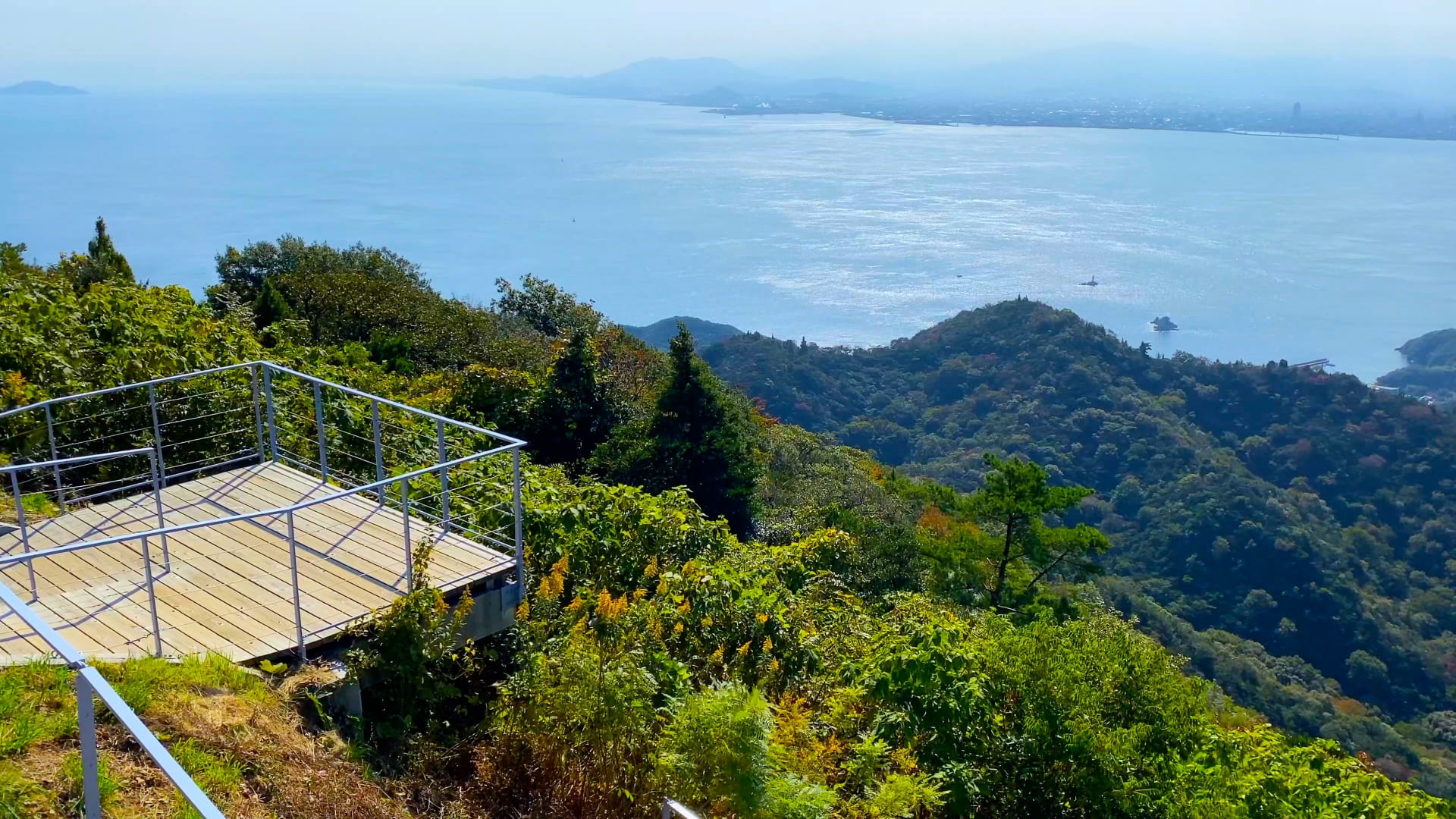
- Kirosan Observatory Park (Oshima): sweeping views of Kurushima Kaikyo Bridge and the scattered islands of the Seto Inland Sea. The underground observation deck was designed by architect Kengo Kuma (listed among Shikoku’s 88 scenic views)
- Kaizan Park (Hakatajima): approximately 1,000 cherry trees with a 360-degree panoramic view from the summit — spectacular in spring
Info
If you enjoy island art experiences in the Seto Inland Sea, the article on spending a day with art on Naoshima is also worth reading — a different area but equally captivating.
Budget Breakdown: How Much Does a Day of Cycling Cost?
Plan on spending ¥5,000–8,000 (approx. USD 33–53) per day. Bike rental and meals are the main costs. Bridge tolls are currently free for cyclists through March 31, 2026.
| Item | Estimated Cost | Notes |
|---|---|---|
| Standard rental bike | ¥3,000/day (approx. USD 20) | ¥1,100 security deposit refunded on return |
| Electric-assist rental bike | ¥2,000–4,000/day (to be verified) | Worth it for hilly sections or longer rides |
| Bridge tolls | ¥0 (free through March 31, 2026) | May be approx. ¥500 total after the free period ends (to be verified) |
| Ferry to Mukaishima (Onomichi start) | approx. ¥100–200 | For riders starting from Onomichi |
| Meals and snacks | ¥2,000–5,000 | Varies by stops |
| Attraction admission fees | ¥0–1,500 | e.g., Oyamazumi Shrine treasure house, Kosanji Temple |
| Daily total | approx. ¥5,000–8,000 (USD 33–53) |
Warning
The bridge toll-free period runs through March 31, 2026. If you plan to ride after April 2026, check the current toll schedule before your trip.
Best Season and How to Avoid the Crowds
Spring (March–April) and autumn (October–November) offer the best weather and scenery. Summer carries a real risk of heat exhaustion. Golden Week (early May) is the busiest and most congested period.
| Period | Rating | What to Expect |
|---|---|---|
| March–April (spring) | ★★★★★ | Pleasant temperatures, cherry blossoms, citrus flowers. Crowds build toward Golden Week |
| Early May (Golden Week) | ★★☆☆☆ | Peak crowds. Rental bikes may sell out very early in the morning |
| Early–mid June | ★★★★☆ | Underrated window before the rainy season. Long daylight hours, fewer crowds |
| July–August (summer) | ★★☆☆☆ | High risk of heat exhaustion. Hydrate frequently and plan shorter days |
| September–October (autumn) | ★★★★★ | Mandarin harvest season. Mid-to-late October is especially recommended |
| November–February (winter) | ★★★☆☆ | Quiet, but cold northern winds can make riding difficult. Layer up |
Point
Weekdays are significantly quieter than weekends and holidays. During peak periods, aim to arrive at your starting terminal before 9 AM to secure an electric-assist bike.
Practical Tips for First-Time Cyclists
No serious cycling experience is needed, but smart pacing and hydration planning make a big difference. A realistic benchmark: 10 km per hour, up to 50 km per day for a beginner.
- Travel light: Large suitcases can be stored at rental terminals or your accommodation (to be verified — confirm in advance)
- Use Cycle Oasis stops: Over 200 rest points along the route offer free tap water, air pumps, and restrooms
- Bring a rain jacket: Umbrellas are unsafe on a bike. A compact rain jacket is essential even on partly cloudy days
- Follow the blue line: Distance markers every 1 km make it nearly impossible to get lost
- Mind sunset times: Bridge approaches become dangerous in the dark. Aim to reach your destination by 4–5 PM
- Watch for slippery surfaces: Road markings, manhole covers, and metal grates become treacherous when wet
- Consider travel insurance: Accidents happen — check whether your travel or cycling insurance covers the route
Warning
Bridge approach ramps average a 5–6% gradient. A standard geared bike handles them fine, but if you’re not confident about hills, choose an electric-assist bike.
Summary
The Shimanami Kaido offers an experience unlike any other cycling route — crossing the Seto Inland Sea island by island over a series of spectacular bridges. Build your plan around a 2-day crossing and adjust based on fitness and time.
- Start from Imabari if you’re exploring Ehime or Shikoku; start from Onomichi if you’re arriving by Shinkansen
- Use Shimanami Japan’s public rental terminals for the most flexibility — electric-assist bikes sell out fast during peak periods
- Aim for no more than 50 km per day as a beginner; the 2-day plan with an overnight on Omishima works well
- Bridge tolls are free through March 31, 2026 — check current rates if you’re riding after that
- Spring (March–April) and autumn (October–November) are the best seasons; expect crowds during Golden Week