What You’ll Learn in This Article
- Why travelers who have done Tokyo and Kyoto are choosing Shikoku as their next Japan destination
- In 2024, Shikoku recorded 1,664,340 foreign guest nights, up 80.7% year on year
- How Shikoku compares with Tokyo and Kyoto on crowds, costs, and travel style
- Why clear rivers, the Seto Inland Sea, remote valleys, and pilgrimage culture make the island feel different
- How to reach Shikoku from Osaka, Tokyo, and Okayama, plus sample 4-day and 7-day routes
Why Shikoku Is Getting More Attention Now
You have done Tokyo. You have walked Kyoto’s temple districts. Now the question most repeat visitors to Japan eventually ask is: where next? For a growing number of travelers, the answer is Shikoku. In 2024, the island’s four prefectures recorded 1,664,340 foreign guest nights—up 80.7% year on year.
International travel media has helped push that shift. National Geographic featured the Shikoku pilgrimage as a serious long-distance walk for travelers looking beyond Spain’s Camino routes, while Lonely Planet ranked Shikoku sixth in its Best in Travel 2022 Top 10 Regions list.
The appeal is straightforward. Many first-time visitors finish their Japan trip in the big cities. On a return trip, they want quieter landscapes, local routines, and nature they can physically enter rather than simply photograph. Shikoku answers that demand better than almost anywhere else in the country.
Info
A 2023 walking-pilgrim survey near Temple 11 in Tokushima found that foreign pilgrims accounted for 44% of all walkers counted there. Interest in the 88-temple route is no longer niche.
- Shikoku District Transport Bureau: 2024 accommodation statistics
- National Geographic: Japan’s 88-temple Shikoku Trail
- JNTO: Shikoku makes Lonely Planet’s Best in Travel 2022 list
- KSB News: foreign walkers made up 44% of surveyed pilgrims in 2023
What Makes Shikoku Different from Japan’s Major Tourist Cities
Compare Tokyo, Kyoto, and Shikoku on three axes: crowds, cost, and the kind of experience you actually get. The gap is wider than many travelers expect.
Crowds: Shikoku Still Has the Quiet Time That Kyoto Lost
Kyoto now demands timing and patience at many major sights. In Shikoku, even famous places still leave room for silence, slower pacing, and ordinary local life.
| Area | Official 2024 inbound lodging figure | What it feels like |
|---|---|---|
| Kyoto City | 18.1 million foreign overnight visitors | Queues, timed entries, and crowd-management measures are routine at major sights |
| Shikoku (4 prefectures) | 1.66 million foreign guest nights | There is still room to move slowly and spend quiet time at major destinations |
| Kagawa | 0.90 million foreign guest nights | Udon shops and museums get busy, but waits are usually manageable outside event peaks |
| Ehime | 0.45 million foreign guest nights | At places like Dogo Onsen, the mood still feels more local than staged |
The official figures above come from different tourism datasets, so they are not perfectly like-for-like. Even so, the scale gap is obvious on the ground. Kyoto raised its accommodation tax ceiling to JPY 10,000 per person per night from March 1, 2026 as part of its response to tourism pressure. Shikoku does not carry that same weight of overtourism.
What you travel through in Shikoku is not a district built mainly for visitors. Fishing ports, bathhouses, roadside udon shops, and temple towns still function first as local places. That changes the tone of the trip immediately.
Costs: The Same Budget Usually Buys a Longer Stay
Accommodation and food in Shikoku often land far below what travelers now pay in Tokyo or Kyoto. That difference turns directly into extra nights, side trips, or more relaxed planning.
| Item | Tokyo | Kyoto | Shikoku (Takamatsu / Matsuyama) |
|---|---|---|---|
| Mid-range hotel per night | JPY 15,000-17,000 (approx. USD 100-115) | JPY 20,000-30,000 (approx. USD 135-200) | JPY 7,000-9,000 (approx. USD 47-60, to be verified) |
| Lunch | JPY 1,000-1,500 (approx. USD 7-10) | JPY 1,200-2,000 (approx. USD 8-14) | JPY 200-500 (approx. USD 1.50-3.50) for self-service udon or simple set meals |
| Bath / soak | JPY 2,000-3,000 (approx. USD 14-20) at a large city spa | Varies widely | From JPY 700 (approx. USD 5) at Dogo Onsen Honkan |
At a self-service Sanuki udon shop, a basic bowl can still cost JPY 200-300. Add a couple of tempura pieces and you may still stay under JPY 500. In practical terms, that means one Kyoto dessert often costs the same as a full casual meal in Kagawa.
Shikoku’s Nature: Experiences That City Trips Cannot Offer
Shikoku is the smallest of Japan’s four main islands, but it may be the densest in terms of nature. Mountains, clear rivers, and coastlines often sit within one to two hours of each other.
Clear Rivers: Some of Japan’s Best Water Is Here
Shikoku has both the Shimanto River, often called Japan’s last major undammed clear stream, and the Niyodo River, famous for its repeated top rankings in national water-quality surveys.
The Shimanto River runs 196 km (122 miles) with no large dam blocking its natural flow. Low concrete submersible bridges cross the river without railings, built to let floodwater pass over them safely. When you paddle beneath one by canoe, the sound is mostly current and birds, and in some stretches you can see the stones on the riverbed clearly below.
The Niyodo River is known for “Niyodo Blue,” a striking blue-green color created by the river’s clarity and the way light enters the gorge. Step into the water and the temperature hits immediately. It feels less like sightseeing and more like entering the landscape with your whole body.
Seto Inland Sea and Pacific Ocean: Two Seas on One Island
Shikoku’s north faces the calm Seto Inland Sea. Its south opens onto the rougher Pacific. In a single day, the coastline can feel as if you changed countries.
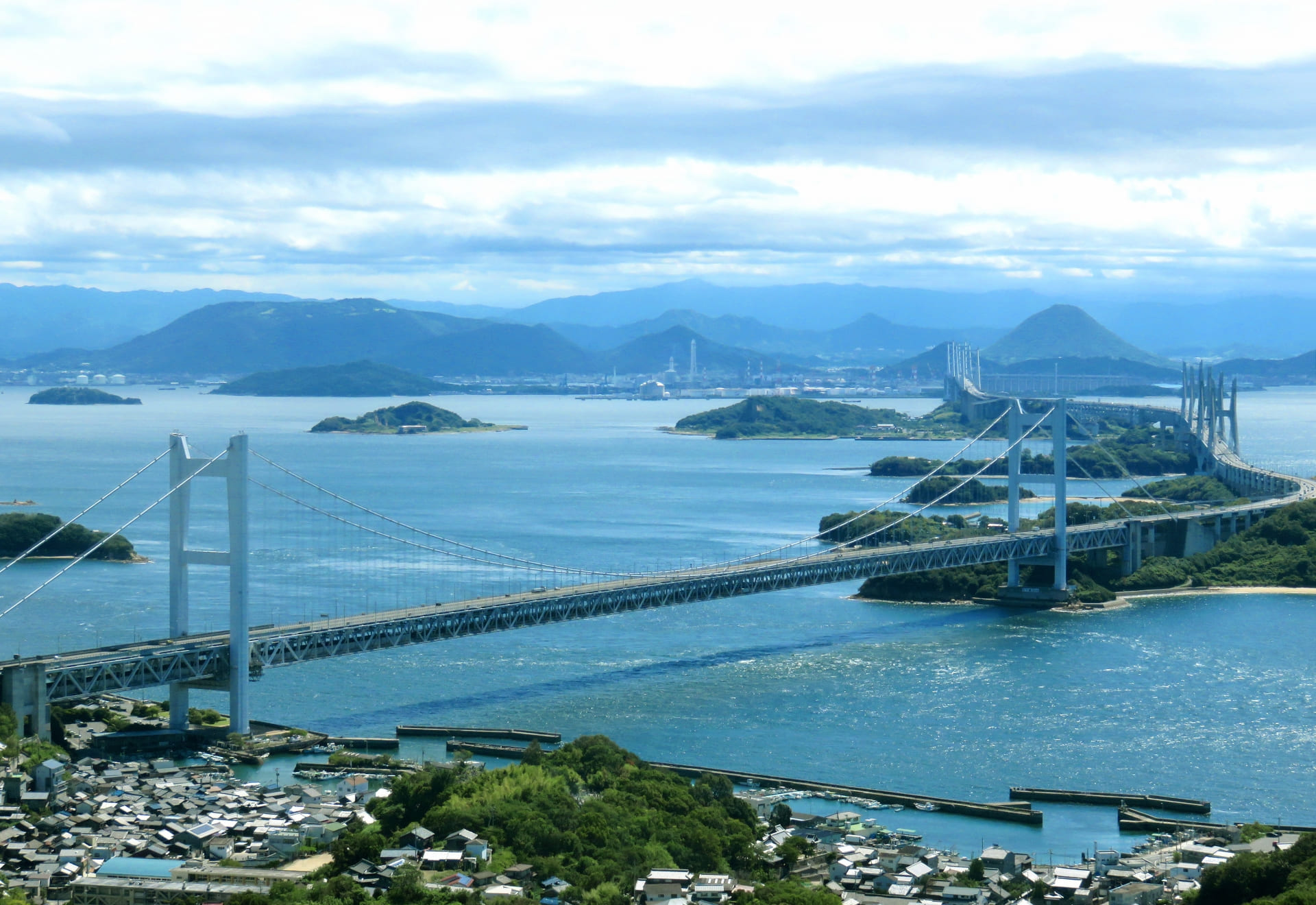
Cycle part of the Shimanami Kaido and the Seto Inland Sea spreads out in quiet layers of bridges and small islands. Stand at Katsurahama in Kochi and the Pacific horizon runs from edge to edge, with heavier surf and a completely different scale. Few parts of Japan let you feel that contrast so quickly.
Deep Valleys: Iya and the Mountain Interior
The Iya Valley in Tokushima, often counted among Japan’s three great hidden regions, is where roads narrow, mountains close in, and the mood turns unmistakably remote.
Cross the vine bridge and you see the gorge through the gaps beneath your feet. The bridge shifts slightly as you walk, and below it the river is the loudest thing in the valley. Nearby hot springs add a second layer to the experience: soaking in open air while looking down into the mountains makes it hard to believe Osaka is only a few hours away.
Point
Nature in Shikoku is not mainly about viewing platforms. The core experience is entering it: paddling a river, cycling a bridge route, crossing a valley bridge, or soaking in a mountain bath.
The Shikoku Pilgrimage: A Journey Found Only Here
The Shikoku Henro, or 88-temple pilgrimage, is a roughly 1,200 km (745 mile) circuit around the island. International participation is now firmly established, not exceptional.
Walking the full circuit usually takes 40-60 days, but many travelers do a shorter “chunk pilgrimage” over one or two days. The rhythm is different from a normal sightseeing trip. White jackets, walking staffs, temple stamps, and long quiet roadside stretches shape the day.
One of the most distinctive parts of the route is osettai, the local custom of offering help to pilgrims. Someone may hand you a drink, fruit, or sweets simply because you are walking the route. Travelers often remember that human warmth as strongly as the temples themselves.
That is one reason the pilgrimage keeps drawing comparison with other long-distance spiritual walks. What it offers is not only temples, but closeness to local people and everyday rural Japan.
Four Prefectures, Four Different Personalities
Climate, food, landscapes, and atmosphere shift from prefecture to prefecture. Shikoku works best when you think of it not as one uniform destination, but as four distinct travel styles sharing one island.
Kagawa Prefecture: Seto Inland Sea Culture in Compact Form
Japan’s smallest prefecture packs udon, art islands, gardens, and ferry travel into a compact area centered on Takamatsu.
From Takamatsu Port, ferries open the door to Naoshima and Shodoshima. Naoshima is internationally known for Tadao Ando architecture and Yayoi Kusama’s outdoor works, while the wider Setouchi art islands pull global visitors every festival cycle. Back in the city, Ritsurin Garden offers meticulously shaped pines, ponds, and borrowed-mountain views, and a bowl of udon can still be your next stop a few minutes later. That short distance between major experiences is one of Kagawa’s strengths.
Ehime Prefecture: A Gentle Mix of Hot Spring, Castle, and Citrus
Centered on Matsuyama, Ehime brings together Dogo Onsen, Matsuyama Castle, and the Shimanami Kaido in a way that feels easy rather than overwhelming.
Dogo Onsen Honkan is still an operating public bath inside an Important Cultural Property. Matsuyama Castle rises above the city on its hilltop, and in winter Ehime’s citrus culture becomes obvious at roadside stands and local shops. Even the well-known “orange juice from the tap” gimmick makes sense once you see how central mikan is to everyday life here.
Kochi Prefecture: Pacific Scale and Bigger Natural Drama
Kochi combines the Shimanto and Niyodo rivers with a Pacific coastline that feels broader and rougher than anywhere else in Shikoku.
Kochi is also known for its sociable food culture. At Hirome Market, strangers share tables, order plates from different stalls, and start conversations more easily than in most Japanese cities. Then you go to Katsurahama, face the open ocean, and understand how strongly geography shapes the prefecture’s temperament.
Tokushima Prefecture: Whirlpools, Hidden Valleys, and the Eastern Gateway
Tokushima is the easiest part of Shikoku to reach from Kansai, and it balances headline attractions with some of the island’s deepest mountain scenery.
The Naruto whirlpools are one of Japan’s best-known tidal spectacles, while the Otsuka Museum of Art recreates more than 1,000 famous works on full-scale ceramic panels. Inland, the Iya Valley brings the mood back to steep mountains and river gorges. In August, Awa Odori transforms central Tokushima into one of Shikoku’s biggest festival scenes.
When to Go: Every Season Has a Good Reason
Shikoku has a relatively mild climate, but what the trip feels like changes a lot by season.
| Season | Best experiences | What stands out |
|---|---|---|
| Spring (Mar-May) | Cherry blossoms, hot springs, art-island trips | Cherry trees at Kochi Castle and Matsuyama Castle, plus Shiude-yama’s Seto Inland Sea views |
| Summer (Jun-Aug) | River activities, festivals, cycling | Shimanto canoe trips, Awa Odori in August, Shimanami Kaido rides |
| Autumn (Sep-Nov) | Foliage and seasonal food | Ritsurin Garden night illuminations, Iya Valley leaves, new rice and sake |
| Winter (Dec-Feb) | Hot springs and citrus | Dogo Onsen, Ehime mikan, and especially clear winter light over the Seto Inland Sea |
Info
The easiest overall seasons are March-May and October-November. Summer is excellent for river trips and festivals, while winter is the quietest period for hot-spring stays.
Closer Than It Looks: How to Reach Shikoku
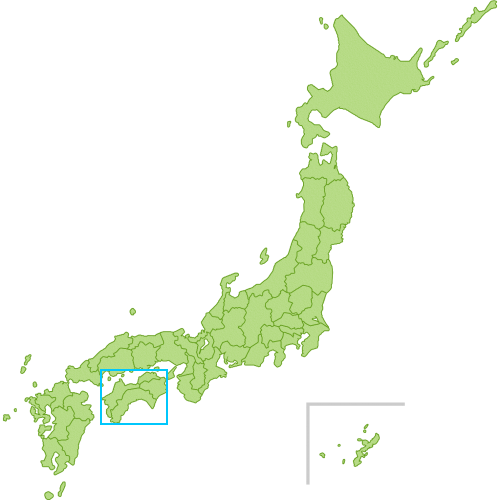
Shikoku sounds remote until you map the actual routes. From Osaka, Takamatsu is roughly a two-hour trip, which is closer than many travelers assume.
| From | To | Typical route | Travel time | Typical one-way cost |
|---|---|---|---|---|
| Osaka | Takamatsu | Shinkansen to Okayama + Marine Liner | about 2 hr | JPY 6,700-7,800 (approx. USD 45-53) |
| Osaka | Tokushima | Highway bus | about 2 hr 40 min (to be verified) | JPY 3,000-4,000 (approx. USD 20-27, to be verified) |
| Tokyo | Takamatsu | Flight (Haneda -> Takamatsu) | about 1 hr 15 min | from about JPY 10,000 (approx. USD 67) |
| Tokyo | Matsuyama | Flight (Haneda -> Matsuyama) | about 1 hr 20 min (to be verified) | from about JPY 11,500 (approx. USD 77) |
| Okayama | Takamatsu | Marine Liner rapid train | about 55 min | about JPY 1,660 (approx. USD 11) |
| Hiroshima | Imabari | Shimanami highway bus | about 2 hr 50 min | about JPY 3,000 (approx. USD 20, to be verified) |
Point
International visitors can use the ALL SHIKOKU Rail Pass. It comes in 3-day, 4-day, 5-day, and 7-day versions and covers JR Shikoku plus a defined set of local lines, buses, and ferries. Coverage changed in March 2026, so check the official list before buying.
Getting Around Shikoku and Sample Itineraries
Inside Shikoku, the basics are limited-express trains and rental cars. For a first visit, two prefectures in four days is realistic. For a fuller loop, plan a week.
| Section | Best option | Travel time | Typical one-way fare |
|---|---|---|---|
| Takamatsu -> Matsuyama | Limited Express Ishizuchi | about 2 hr 30 min | to be verified |
| Takamatsu -> Kochi | Limited Express Nanpu | about 2 hr 20 min | JPY 4,990 (approx. USD 33) |
| Takamatsu -> Tokushima | Limited Express Uzushio | about 1 hr 10 min | to be verified |
For rivers, valleys, and smaller coastal areas, a rental car is usually the most practical choice. Roads are generally less stressful than in the major metropolitan regions, and daily rates often fall in the JPY 2,200-8,000 range depending on season and vehicle class.
Warning
Train and bus frequencies can be thin compared with Tokyo or Osaka. Some rural bus routes run only a few times a day, so check timetables before locking in the rest of your plan.
4 Days: Takamatsu-Based Kagawa + Ehime Route
This is the most efficient first Shikoku trip if you want art, gardens, a castle, and a hot spring without moving hotels every night.
- Day 1: Arrive in Takamatsu -> Sanuki udon tour -> Ritsurin Garden -> stay in Takamatsu
- Day 2: Takamatsu Port -> Naoshima art island for the day -> stay in Takamatsu
- Day 3: Takamatsu -> Matsuyama (about 2.5 hours by limited express) -> Matsuyama Castle -> Dogo Onsen -> stay in Matsuyama
- Day 4: Morning bath at Dogo Onsen -> stroll Matsuyama -> depart
7 Days: Full-Circle Shikoku Route
This route touches all four prefectures. A rental car makes it much easier, especially through Tokushima and Kochi.
- Day 1: Arrive in Takamatsu -> Sanuki udon stops -> Kotohira-gu Shrine -> stay in Takamatsu
- Day 2: Takamatsu Port -> Naoshima or Shodoshima for the day -> stay in Takamatsu
- Day 3: Takamatsu -> Iya Valley (vine bridge) -> Oboke Gorge -> stay in Kochi
- Day 4: Katsurahama -> Hirome Market -> head toward the Shimanto River -> stay in Shimanto area
- Day 5: Shimanto River canoeing or submersible-bridge stops -> via Uwajima -> stay in Matsuyama
- Day 6: Matsuyama Castle -> Dogo Onsen -> stay in Matsuyama
- Day 7: Imabari towel factory visit -> part of the Shimanami Kaido -> depart
Summary
Shikoku is one of the strongest answers to the question: where should I go in Japan after Tokyo and Kyoto?
- Foreign demand rose sharply in 2024, but the island still feels far less crowded than Japan’s major city destinations
- Costs are often dramatically lower, especially for food and mid-range stays
- The core appeal is active nature: rivers, cycling routes, valleys, and coastlines you move through physically
- The 88-temple pilgrimage offers a kind of long-distance spiritual travel that is hard to find elsewhere
- Access is easier than it looks, with straightforward routes from Osaka, Tokyo, and Okayama
For more detail on individual destinations, see our guides to Sanuki udon, Dogo Onsen, the Shimanami Kaido, Shimanto River canoeing, and the Naruto whirlpools.