What You’ll Learn in This Article
- How to reach Izumo and Matsue from Tokyo or Osaka without a car — flights and Shinkansen + Yakumo Limited Express
- Getting from Izumo Station to Izumo Taisha by Ichibata Electric Railway or bus — times and fares
- Traveling between Matsue and Izumo Taisha via JR + Ichibata Railway or direct bus
- Complete car-free 2-day itinerary: Day 1 at Izumo Taisha, Day 2 at Matsue Castle and the Horikawa canal cruise
- Izumo Taisha worship etiquette (two bows, four claps, one bow) and how long to budget at each site
Izumo & Matsue Are Easily Doable Without a Car
Izumo Taisha and Matsue Castle are among the few destinations in the San’in region where public transport connects all the key sights. From Izumo City Station to Izumo Taisha-mae Station takes about 25 minutes on the Ichibata Electric Railway; Matsue to Izumo City is about one hour by JR. Combine trains and buses, and two full days fit together comfortably — no rental car needed.
The San’in region has a reputation for sparse public transport — and for many destinations that reputation holds. But the route linking Izumo Taisha, Matsue Castle, and the Horikawa canal cruise is covered by Ichibata Railway and local buses, with all main sights within walking distance of a station or bus stop. Unlike visiting Niyodo Blue or the Shimanto River, where a car is almost essential, these two cities work well for car-free travelers.
Getting to Izumo & Matsue — Options by Departure City
No Shinkansen (bullet train) serves Shimane Prefecture. From Tokyo or Osaka, the choice is either a flight or Shinkansen + Yakumo Limited Express. If time is the priority, fly; if cost matters more, the Yakumo Express is the better value.
| Departure | Route | Travel Time | Approx. Fare (one way) | Arrival |
|---|---|---|---|---|
| Tokyo (Haneda) | Flight (JAL etc.) | Approx. 1h 25min | ¥15,000–30,000 (approx. USD 100–200; varies by season) | Izumo Enmusubi Airport |
| Tokyo | Shinkansen (Tokyo → Okayama) + Yakumo Limited Express | Approx. 6 hours | ¥18,000–22,000 (approx. USD 120–145) | Matsue Station or Izumo City Station |
| Tokyo | Overnight sleeper: Sunrise Izumo | Approx. 11h 30min (overnight) | ¥15,000–20,000 incl. private compartment (approx. USD 100–130) | Izumo City Station |
| Osaka (Itami) | Flight | Approx. 1h 20min | ¥10,000–20,000 (approx. USD 65–130) | Izumo Enmusubi Airport |
| Osaka (Shin-Osaka) | Shinkansen (Shin-Osaka → Okayama) + Yakumo Limited Express | Approx. 4h 20min | ¥12,000–15,000 (approx. USD 80–100) | Matsue Station or Izumo City Station |
Point
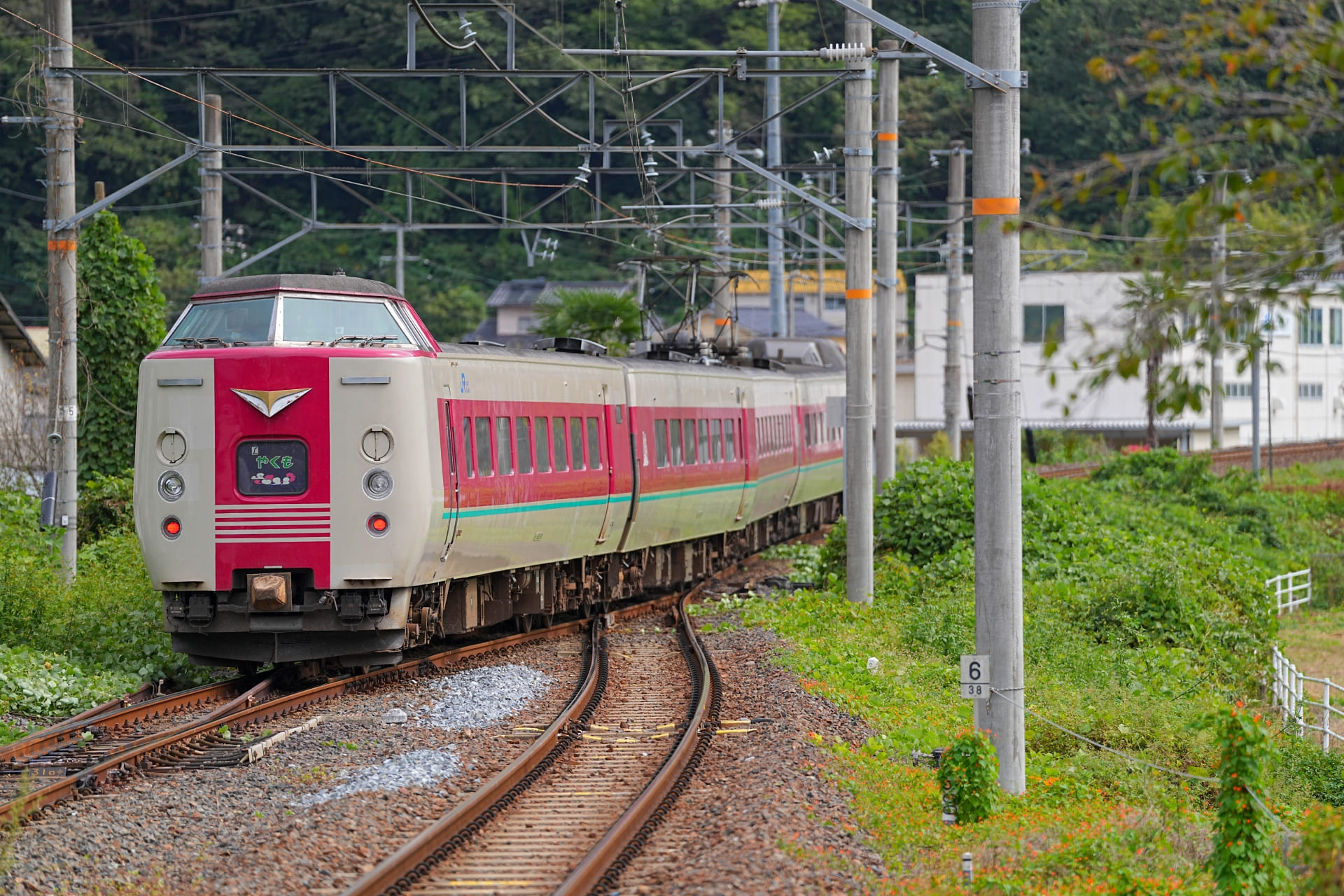
The Yakumo Limited Express (Okayama–Matsue–Izumo City) was upgraded to new rolling stock in 2024. Okayama to Matsue takes about 2 hours 30 minutes. Reserved seats are strongly recommended — book in advance.
Getting Around from Izumo Enmusubi Airport
If you fly in, airport limousine buses run directly to all major destinations — no additional transfers needed.
| Destination | Transport | Travel Time | Fare |
|---|---|---|---|
| Matsue Station | Airport limousine bus | Approx. 35 min | Approx. ¥750 (USD 5) |
| Izumo City Station | Airport limousine bus | Approx. 25 min | Approx. ¥480 (USD 3) |
| Izumo Taisha | Airport limousine bus (direct) | Approx. 35 min | Approx. ¥860 (USD 6) |
Matsue to Izumo Taisha — Ichibata Railway vs. Direct Bus
There is no direct train between Matsue and Izumo Taisha. The options are JR + Ichibata Electric Railway (one transfer) or a direct Ichibata Bus with no transfers. Choose the bus to avoid switching trains; choose Ichibata Railway for the scenery along Lake Shinji.
| Route | Transfers | Travel Time | Approx. Fare |
|---|---|---|---|
| Matsue Station → JR Izumo City Station → Dentetsu-Izumo City Station → Izumo Taisha-mae (Ichibata Railway) | 1 | Approx. 1h 30min | Approx. ¥1,640 (USD 11) — JR local + Ichibata Railway |
| Matsue Station → JR (Yakumo Express) → Izumo City Station → Ichibata Railway | 1 | Approx. 1h 10min | Approx. ¥2,830 (USD 19) incl. express surcharge |
| Matsue Station → Ichibata Bus (direct, Taisha Line) | None | Approx. 1h 20min | Approx. ¥1,200 (USD 8) (to be verified) |
Info
Ichibata Electric Railway departs from Dentetsu-Izumo City Station and runs along the northern shore of Lake Shinji, reaching Izumo Taisha-mae Station in about 25 minutes. There are stretches where the lake glimmers just outside the window — the ride itself becomes part of the experience. From Izumo Taisha-mae Station, it is about a 5-minute walk to the shrine’s second torii gate.
Izumo City Station to Izumo Taisha by Bus
From the north exit of JR Izumo City Station, Ichibata Bus (Taisha Line) runs to Izumo Taisha Bus Terminal in about 25–35 minutes for approximately ¥500 (USD 3). Get off at the “Seimon-mae” stop — the shrine’s second torii gate is about a 1-minute walk. Buses run roughly every 30 minutes.
- Ichibata Electric Railway — Routes & Timetables (official, English)
- Ichibata Bus — Taisha Line Timetable (official)
2-Day Car-Free Itinerary
Day 1 covers Izumo Taisha and its surroundings from morning through late afternoon, then moves to Matsue for the overnight stay. Day 2 is spent in Matsue: the castle, the canal boat cruise, and the Lafcadio Hearn sites — all on foot. The split minimizes transit time and maximizes sightseeing.
Day 1: Izumo Taisha and Inasa Beach
| Time | Spot | Duration | Notes |
|---|---|---|---|
| 09:30 | Arrive at Izumo City Station or Izumo Enmusubi Airport | — | Previous-night stay or early-morning flight |
| 10:00 | Arrive at Izumo Taisha-mae Station or Seimon-mae bus stop | — | Ichibata Railway or bus (approx. 25–35 min) |
| 10:00–11:30 | Izumo Taisha — worship | 60–90 min | Walk from Seidamari (second torii) through to the Main Hall and Kaguraden Hall |
| 11:30–13:00 | Shinmon-dori — stroll and lunch | 60–90 min | Izumo soba restaurants and cafes along the shrine approach road |
| 13:00–14:00 | Shimane Museum of Ancient Izumo (optional) | 60 min | Admission: ¥620 adults (USD 4). Located next to Izumo Taisha |
| 14:15–15:00 | Inasa Beach (Inasa-no-Hama) | 30–45 min | About 13 minutes on foot west of Izumo Taisha |
| 15:30–16:30 | Travel to Matsue | — | Bus or Ichibata Railway + JR (approx. 1h–1h 30min) |
| 17:00 | Check in at Matsue hotel | — | Near Matsue Station or in the Shinji-ko Onsen area |
Day 2: Matsue Castle and the Old Quarter
| Time | Spot | Duration | Notes |
|---|---|---|---|
| 09:00–10:00 | Matsue Castle Keep | 45–60 min | Opens 8:30. Admission: ¥1,200 adults (USD 8) |
| 10:10–11:00 | Gurutto Matsue Horikawa Boat Cruise | Approx. 50 min | ¥1,600 adults (USD 11). Departs from boarding points around Matsue Castle |
| 11:00–12:00 | Stroll around Matsue Castle | 60 min | Shiomi Nawate promenade and samurai district |
| 12:00–13:00 | Lunch | 60 min | Lake Shinji’s Seven Delicacies — clams, eel, and fresh fish dishes |
| 13:00–14:00 | Lafcadio Hearn’s Former Residence + Memorial Museum | 60–90 min | Within easy walking distance of Matsue Castle. Recommended to visit both |
| 14:00–15:00 | Souvenirs and city stroll | 60 min | Matsue Station area has a good selection of Shimane specialty goods |
| 15:30+ | Depart from Matsue Station | — | Yakumo Express to Okayama, or head to Izumo Enmusubi Airport |
Point
Matsue Castle, the Horikawa cruise boarding point, and the Lafcadio Hearn sites are all within a 5–10 minute walk of each other. Day 2 can be done almost entirely on foot.
Izumo Taisha — Worship Guide
Izumo Taisha enshrines Okuninushi-no-Mikoto, the deity of en (fateful connections between people), in Japan’s oldest shrine architectural style — taisha-zukuri. The worship ritual here differs from most other shrines in Japan, so knowing the correct procedure before you arrive makes the visit flow naturally.
| Detail | Information |
|---|---|
| Address | 195 Kizuki-Higashi, Taisha-cho, Izumo, Shimane |
| Worship Hours | 6:00–19:00 (Soga Shrine area closes at 16:30) |
| Admission | Free (Main Hall) |
| Treasure Hall | 8:30–16:30 / ¥300 adults (USD 2) |
| Recommended Time | 60–90 minutes (including Kaguraden Hall) |
Worship Route — From Seidamari to the Main Hall
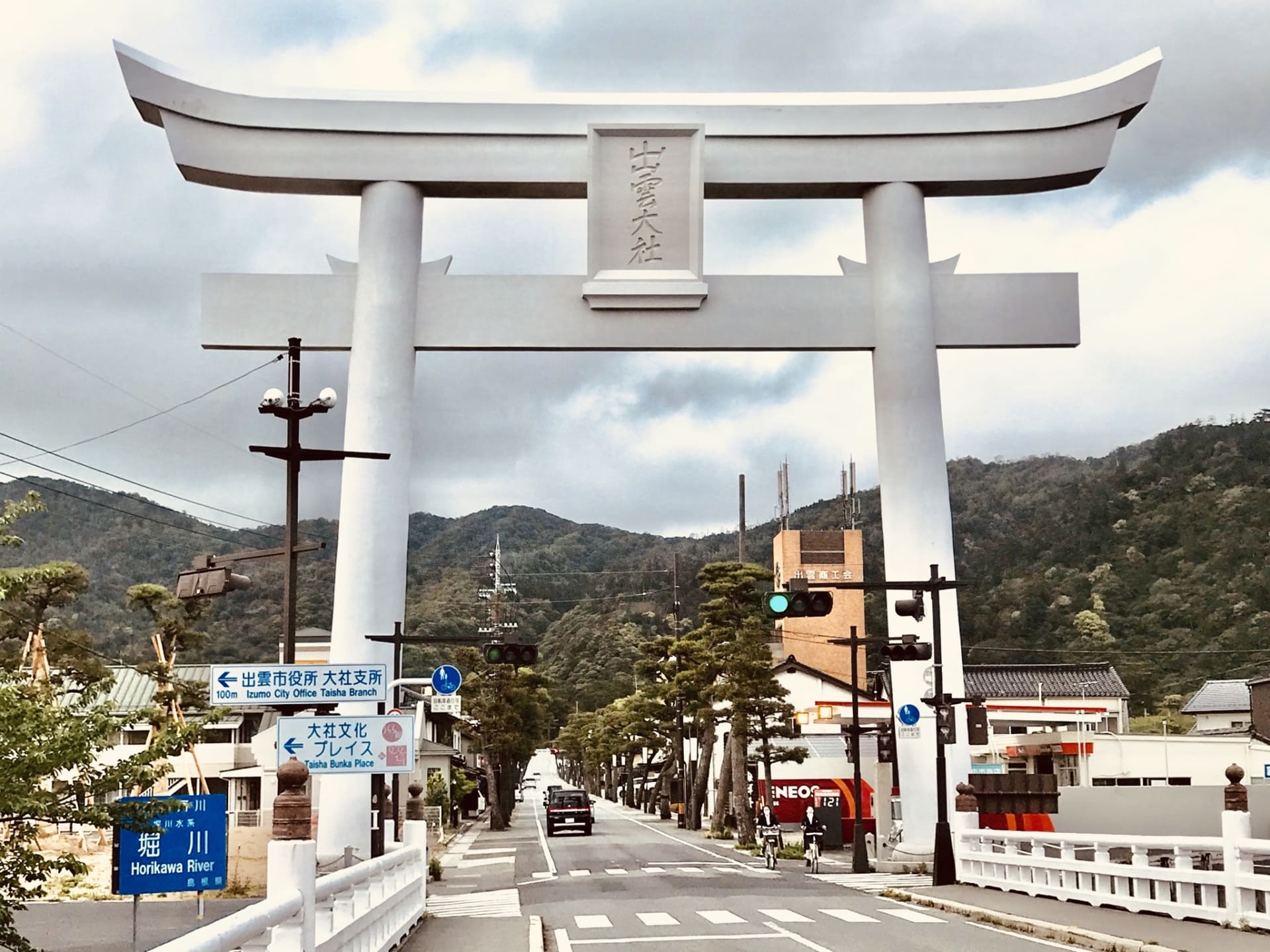
A proper visit begins at the second torii gate, Seidamari, then follows the pine-lined approach toward the Main Hall. The center of the path is reserved for the deities, so walk along either side.
- Seidamari (Second Torii Gate): The entrance to the shrine precinct. The approach road begins here.
- Harae-no-Yashiro (Purification Shrine): On the right side of the approach. Houses four purification deities — stop here before visiting the Main Hall.
- Pine-lined Approach: Designated one of Japan’s 100 Famous Pines. The atmosphere shifts noticeably as you walk through.
- Haiden & Main Hall (Yatsu-ashi-mon Gate): National Treasure. The 24-meter taisha-zukuri Main Hall is worshipped from outside the Yatsu-ashi-mon Gate.
- Soga-no-Yashiro: Directly behind the Main Hall. Enshrines the parent deity of Okuninushi — widely regarded as a powerful spiritual spot. Closes at 16:30.
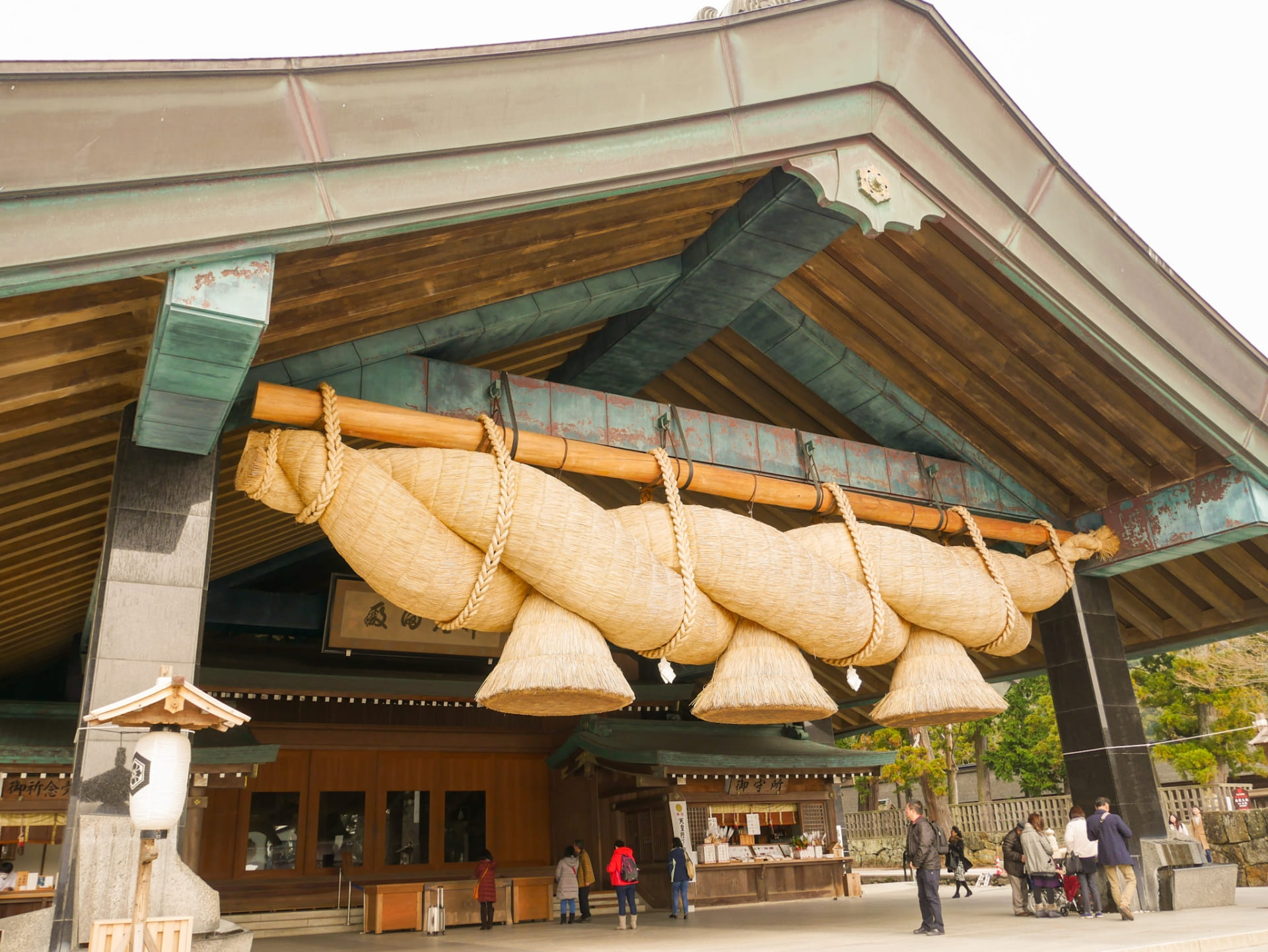
- Kaguraden Hall: Home to one of Japan’s largest shimenawa (sacred ropes) — approximately 8 meters long and weighing about 5 tons.
Warning
Worship at Izumo Taisha follows the ritual of two bows, four claps, and one bow (ni-rei shi-hakushu ichi-rei) — not the standard two bows and two claps used at most Japanese shrines. Clap four times, not two. Do not toss coins at the shimenawa rope of Kaguraden Hall.
Inasa Beach — Setting of the Divine Land-Transfer Myth
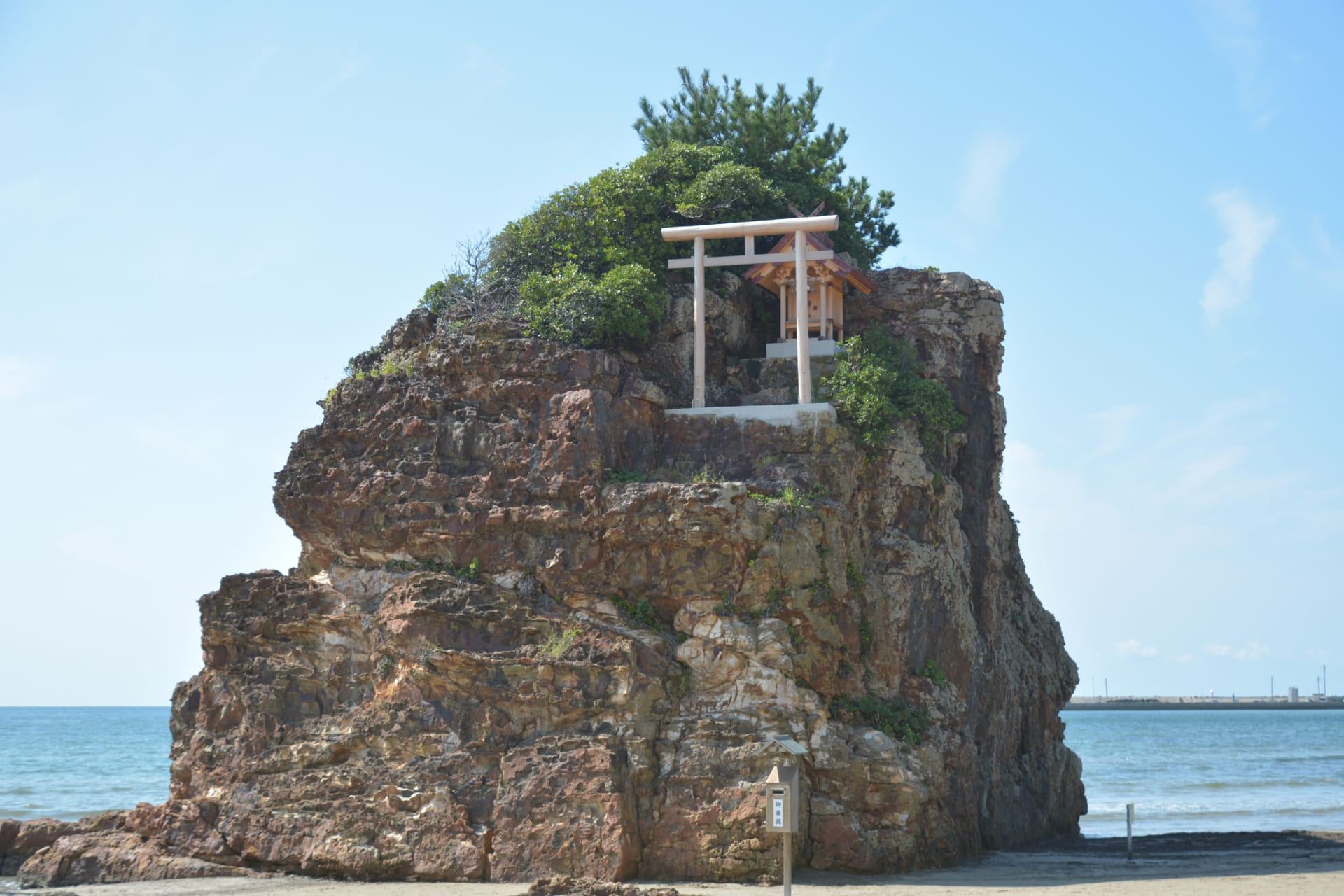
A beach about 13 minutes’ walk west of Izumo Taisha. According to the Kojiki — Japan’s oldest chronicle — this is the shore where Okuninushi-no-Mikoto agreed to cede the land to the heavenly deities. The white sand and the small Benten Island rock remain unchanged from that mythology. Known for its beautiful sunsets, the site has been designated a Japan Heritage landmark under the name “Hinoshizumu Seichi Izumo” (Sacred Land Where the Sun Sets — Izumo).
Benten Island — a small rocky outcrop rising from the water’s edge — enshrines Toyotama-hime-no-Mikoto. The contrast between the white foam and the dark rock makes it a compelling subject for photographs. Arriving between 14:00 and 15:00 catches the light beginning to angle lower, a gradual preview of the famous sunset.
Matsue Highlights — Castle, Canals, and Lafcadio Hearn
Matsue’s main attractions are clustered within roughly one kilometer of the castle. You can connect the castle, the boat cruise, the samurai district, and the Lafcadio Hearn sites entirely on foot — with time for lunch — and cover everything in half a day.
Matsue Castle (National Treasure)
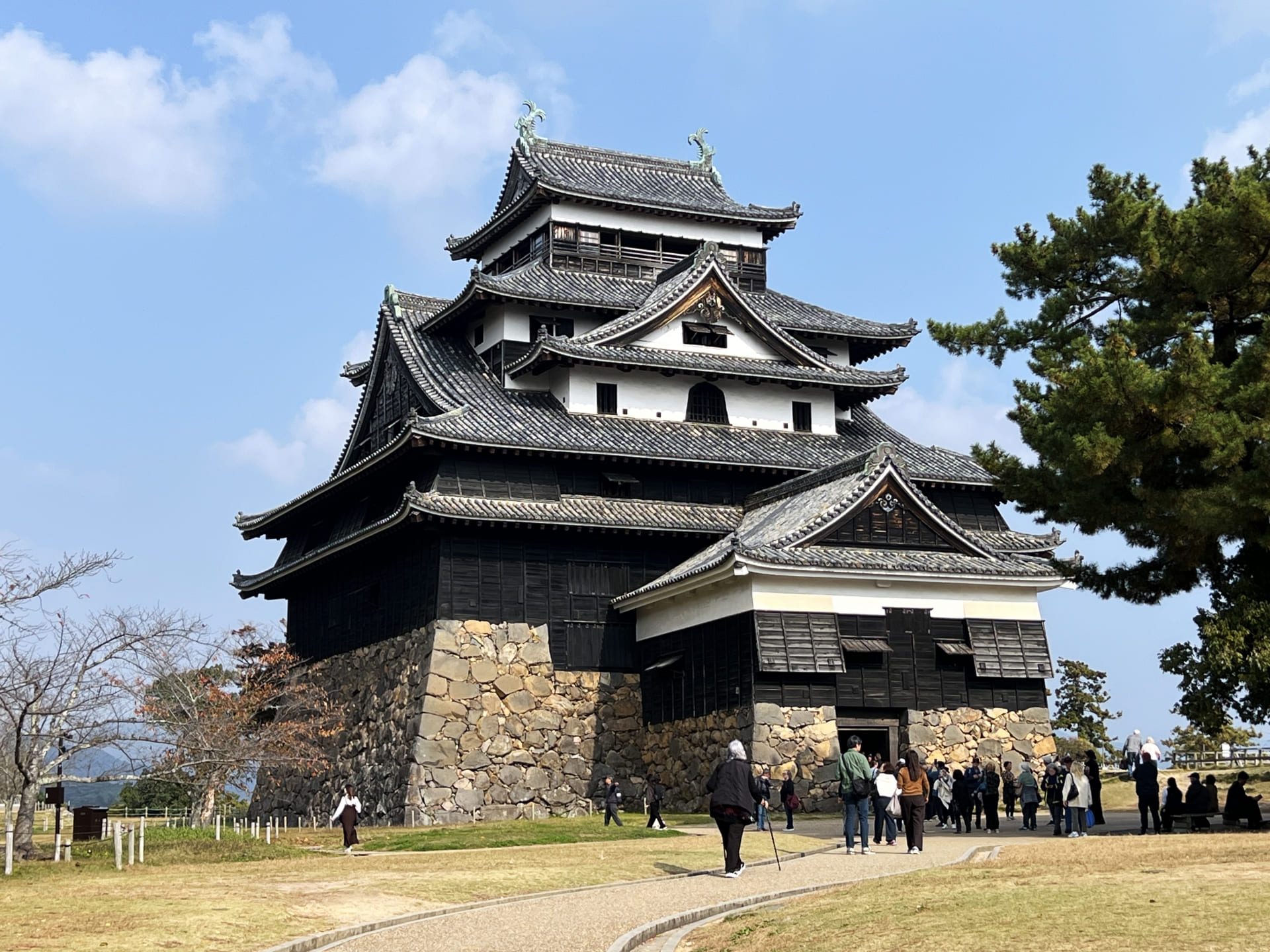
The keep was built in 1611 by Horio Yoshiharu and is one of only twelve original castle keeps in Japan to survive from before the Edo period. It was designated a National Treasure in 2015. From the top floor (fifth story), both Lake Shinji and the city spread out in every direction.
| Detail | Information |
|---|---|
| Address | 1-5 Tono-machi, Matsue, Shimane |
| Opening Hours | Apr–Sep: 8:30–18:30 / Oct–Mar: 8:30–17:00 (last entry 30 min before closing) |
| Admission | ¥1,200 adults (USD 8) / Free for middle school students and younger |
| Closed | Open year-round (temporary closures possible) |
| Recommended Time | 45–60 minutes |
Inside, the keep is five stories of original timber — steep stairs and heavy black-lacquered pillars that have stood for over 400 years. Shoes must be removed at the entrance and carried in a bag (provided), so slip-on footwear makes things easier. The top floor opens on all four sides, framing Lake Shinji and the city at once.
Info
Admission fees are scheduled to change from July 1, 2026 (to be verified). Check the official website for the latest prices before your visit.
Gurutto Matsue Horikawa Boat Cruise
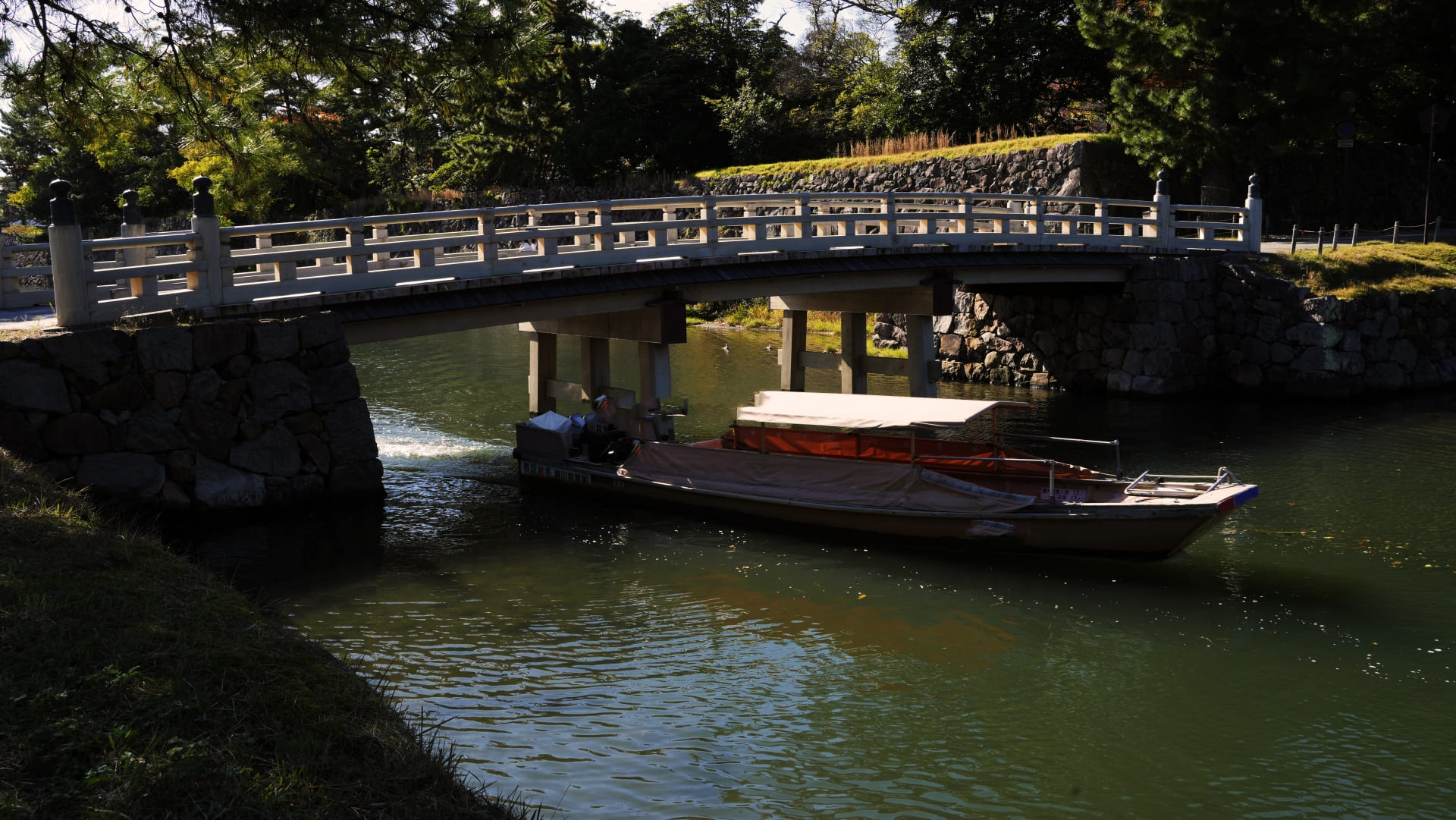
A 50-minute tour of the moat surrounding Matsue Castle aboard a covered, low-profile wooden boat. The route passes under 17 bridges; at four of them, the roof lowers automatically and every passenger ducks down together. In winter (December–March), all boats are fitted with a kotatsu — a heated table with a blanket — to ward off the cold.
| Detail | Information |
|---|---|
| Fare | ¥1,600 adults (USD 11) / ¥1,300 middle & high school (USD 9) / ¥800 elementary (USD 5) |
| Operating Hours | Mar–Sep: 9:00–17:00 / Oct–Feb: 9:00–16:00 |
| Duration | Approx. 50 minutes |
| Boarding Points | Several around Matsue Castle (Horikawa Fureai Hiroba, Otemon-mae, etc.) |
As the boat slides under a bridge, the stone arch descends to within a few dozen centimeters of the passengers’ heads — and everyone on board leans forward in unison. It’s a moment that belongs only to this particular cruise.
Lafcadio Hearn’s Former Residence & Memorial Museum
Lafcadio Hearn — known in Japan as Koizumi Yakumo and best known for his ghost story collection Kwaidan — lived in this samurai house in 1891. The adjacent memorial museum documents his life and writing. Both are on the Shiomi Nawate promenade, about a 5-minute walk from Matsue Castle.
| Facility | Opening Hours | Admission |
|---|---|---|
| Lafcadio Hearn’s Former Residence | Apr–Sep: 9:00–18:00 / Oct–Mar: 9:00–17:00 | ¥400 adults (USD 3) (to be verified) |
| Lafcadio Hearn Memorial Museum | Apr–Sep: 8:30–18:30 / Oct–Mar: 8:30–17:00 | ¥400 adults (USD 3) (to be verified) |
Standing in the residence garden, the moat wall and old samurai-district rooflines fill the view. It is one of those quiet spots where you can begin to sense what Hearn saw when he fell in love with Japanese life.
Food — Izumo Soba and Lake Shinji Cuisine
In the Izumo area, the dish to look for is Izumo soba; in Matsue, the freshwater and brackish-water fish from Lake Shinji take center stage. Both are flavors that can only be tasted here.
Izumo Soba (Around Shinmon-dori)
Several soba restaurants line Shinmon-dori, the approach road to Izumo Taisha. The local specialty is warigo soba — buckwheat noodles served in three to five stacked lacquered bowls. Pour the dashi broth over the noodles, then add grated daikon radish and spring onion.
Lake Shinji’s Seven Delicacies (Matsue)
Lake Shinji is a brackish lake — a rare mix of fresh and saltwater — and its seven traditional ingredients, known as the Shinjiko Shichichin, have defined Matsue cuisine for centuries. Restaurants around Matsue serve dishes built around the lake’s bounty.
- Shijimi clams: Lake Shinji supplies the majority of Japan’s shijimi harvest. Best in miso soup or clear broth.
- Eel (unagi): The firm-fleshed eel from Lake Shinji is a Matsue specialty, typically served glazed and grilled.
- Japanese seabass (suzuki): The local preparation is hoshoyaki — wrapped in washi paper and slowly steam-roasted.
- Shirauo (icefish): In season in winter. Served with vinegar-miso dressing.
Where to Stay
For a one-night trip, basing yourself in Matsue makes the most of Day 2. Two areas suit car-free travelers well: near Matsue Station, or in the Matsue Shinji-ko Onsen area along the lakeshore.
| Area | Character | Best For |
|---|---|---|
| Near Matsue Station | Business hotels, JR/bus hub, convenience stores close by | Budget-conscious travelers; those moving on toward Izumo the next day |
| Matsue Shinji-ko Onsen | Traditional onsen ryokan along Lake Shinji — famous for sunset views | Travelers who want a hot spring soak and a slower pace |
| Near Izumo City Station | Close to Izumo Taisha; easy morning departure | Those who want to stay for sunset at Inasa Beach on Day 1 |
Info
The Matsue Shinji-ko Onsen area is served by local bus from in front of Matsue Station. It is easy to time a lakeside stroll at sunset before returning to your inn.
Estimated Costs (2 Days, 1 Night, per Person)
A rough guide covering transport, accommodation, sightseeing, and meals. Based on flying from Tokyo (Haneda) with advance-purchase fares.
| Item | Approx. Cost (per person) |
|---|---|
| Round-trip flights (Haneda–Izumo, advance fare) | ¥20,000–40,000 (USD 130–265) |
| Accommodation (1 night) | ¥8,000–15,000 (USD 53–100) |
| Transport between Izumo Taisha and Matsue | ¥1,500–3,000 (USD 10–20) |
| Matsue Castle + Horikawa cruise + Hearn Residence (3 sites) | Approx. ¥3,200 (USD 21) |
| Meals (2 days) | ¥3,000–6,000 (USD 20–40) |
| <strong>Total estimate</strong> | <strong>Approx. ¥35,000–65,000 (USD 230–430)</strong> |
Travel Tips
- Early-morning worship at Izumo Taisha: The shrine opens at 6:00. Peak crowds arrive between 10:00 and 15:00, so early morning or late afternoon is far more peaceful.
- Kamiari-zuki (the Month of the Gods, lunar October — around late November 2026): According to legend, all eight million deities of Japan gather at Izumo this month. The Kamiari Festival draws very large crowds.
- Bring an IC card: ICOCA, Suica, and PASMO work on Matsue city buses and some routes. Note that Ichibata Electric Railway may require cash on certain segments — confirm before boarding.
- Footwear at Matsue Castle: Shoes must be removed inside the keep and carried in a bag. Slippers are no longer provided. Non-slip socks are recommended for the steep wooden stairs.
- Check timetables in advance: Some Ichibata Railway and bus services run only once or twice an hour. Missing a connection can mean a 30–60 minute wait. Look up departure times before you go.
Summary
Izumo Taisha and Matsue can be covered without a car by combining Ichibata Electric Railway, JR, and local buses. Even within a 2-day itinerary, the trip takes in shrine worship at one of Japan’s most important shrines, a National Treasure castle, a canal boat cruise, and Lafcadio Hearn’s home — a richly varied experience.
- Izumo City Station to Izumo Taisha-mae: Ichibata Railway, approx. 25 min (¥500 / USD 3)
- Matsue to Izumo City: JR local, approx. 1 hour (¥1,140 / USD 8); Yakumo Express, approx. 45 min (¥2,330 / USD 16)
- Worship etiquette at Izumo Taisha: two bows, four claps, one bow — different from most other Japanese shrines
- Matsue Castle, the Horikawa cruise, and the Lafcadio Hearn sites are all within easy walking distance of each other
- Matsue Castle admission: ¥1,200 (USD 8); Horikawa cruise: ¥1,600 (USD 11)
- Best overnight base: near Matsue Station or Matsue Shinji-ko Onsen for Day 2 access
- Ichibata Railway and bus departures are infrequent on some routes — check timetables before you travel