
What You’ll Learn in This Article
- 785 steps to the main shrine and 1,368 to the inner shrine — with estimated times for each
- How to decide whether to go all the way to the inner shrine (based on fitness, time, and weather)
- How to get there from Takamatsu, Okayama, and Osaka with cost estimates
- When to visit to avoid crowds, and what to wear and bring
- Food and souvenirs on the approach, and how to combine the visit with the Kagawa udon pilgrimage
What Is Kotohira-gu (Konpira-san)?
Kotohira-gu is one of Japan’s most visited shrines, set on Mount Zozu in Kotohira Town, Kagawa Prefecture. It is known for its famous stone staircase and sweeping views over the Sanuki Plain, and draws worshippers from across Japan and overseas throughout the year.
The shrine’s formal name is Kotohira-gu (金刀比羅宮, こんぴらぐう), though it is widely known as “Konpira-san” (こんぴらさん). Its deities are Omononushi-no-Kami and Emperor Sutoku, and the shrine is associated with maritime safety, prosperous trade, agriculture, and medicine. Since the Edo period, it has been said that every Japanese person should make the pilgrimage at least once in their lifetime.
The stone staircase runs 785 steps to the main shrine (Go-Hongu) and 1,368 steps to the innermost sanctuary, Oku-sha (Igimi Jinja). Admission is free throughout the grounds. The address is 892-1 Kotohira-cho, Nakatado-gun, Kagawa Prefecture.
Getting There
From central Takamatsu, the Kotoden (local railway) Line takes about one hour to Kotoden-Kotohira Station. From the station exit, signboards point toward the shrine approach, and the stone staircase entrance is just a 2-3 minute walk.
| From | Route | Approx. Duration | Approx. One-Way Cost |
|---|---|---|---|
| Takamatsu | Kotoden (Takamatsu-Chikko → Kotoden-Kotohira) | Approx. 1 hour | ¥820 (approx. USD 5.50) (to be verified) |
| Takamatsu | JR (Takamatsu → Kotohira) | Approx. 1 hour | Approx. ¥750 (approx. USD 5) (to be verified) |
| Okayama | JR Limited Express “Nanpu” (Okayama → Kotohira) | Approx. 54 min | Approx. ¥2,650 (approx. USD 18) (to be verified) |
| Osaka | Shinkansen (Shin-Osaka → Okayama) + Limited Express (Okayama → Kotohira) | Approx. 2–2.5 hours | ¥6,000–8,000 (approx. USD 40–53) (to be verified) |
| Takamatsu | Rental car | Approx. 45–60 min | Gas + parking fees (to be verified) |
The Kotoden Kotohira Line runs directly from Takamatsu-Chikko Station to Kotoden-Kotohira Station. The staircase entrance is just a 2-3 minute walk from the station. If driving, several municipal and private car parks are available nearby, starting from approx. ¥500 (approx. USD 3.30) (to be verified).
The Stone Steps: Numbers and Estimated Times
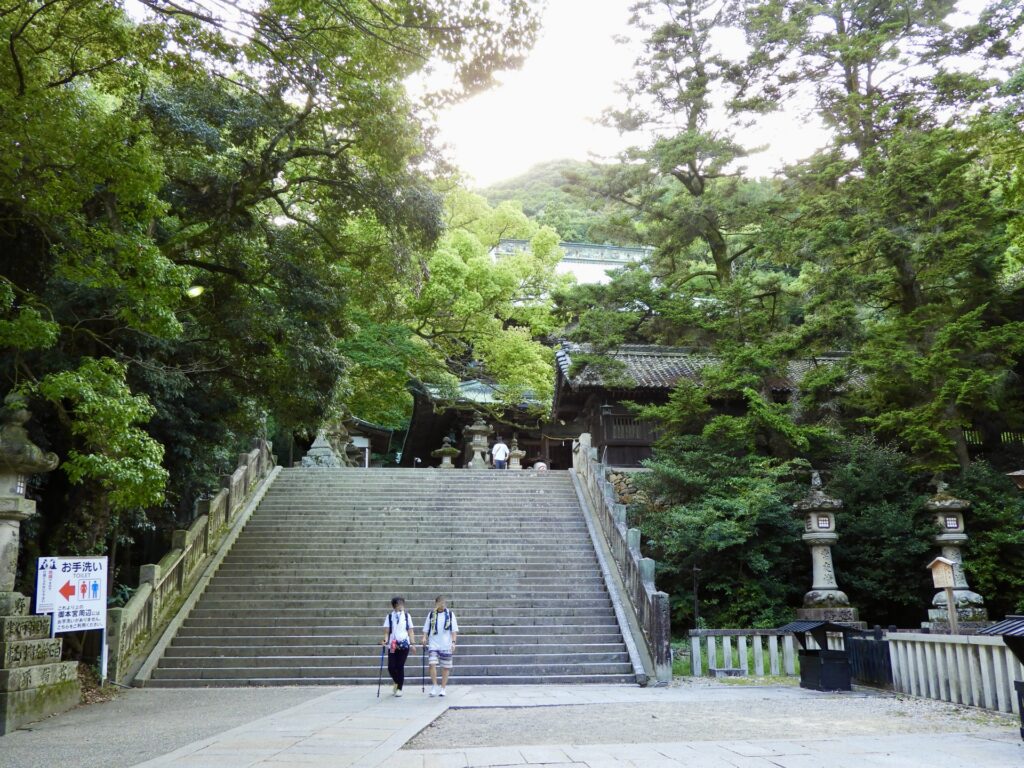
The main shrine is 785 steps up; the inner shrine is 1,368. Pacing yourself and planning your time in advance will make the climb far more comfortable
| Destination | Steps | Approx. Ascent Time | Approx. Round Trip |
|---|---|---|---|
| Go-Hongu (Main Shrine) | 785 | Approx. 40 min | Approx. 1 hr 30 min |
| Oku-sha Inner Shrine (Igimi Jinja) | 1,368 | Approx. 1 hr 20 min | Approx. 2.5–3 hours |
| Go-Hongu to Oku-sha (segment only) | 583 | Approx. 30–40 min | — |
At the steeper stretch called Ichinozaka, the incline increases noticeably and your thighs will start to feel it. Many visitors stop every few steps to rest — benches and open areas along the way make this easy. After rain, the stone surfaces become especially slippery, so hold the handrails and take each step carefully.
Should You Go All the Way to the Inner Shrine?
A visit to the main shrine alone makes for a complete and satisfying experience. Deciding whether to continue to the inner shrine comes down to fitness, available time, and weather conditions.
- [Go to the inner shrine] You have 2+ hours to spare / you are confident in your fitness / you have visited the main shrine before
- [Main shrine is enough] It is your first visit / you are traveling with elderly companions / you are starting in the afternoon with limited time
- [Use caution] Wet or rain-slicked steps significantly increase the risk of a fall. In bad weather, the main shrine is the safer choice
- The inner shrine grounds are accessible 9:00 AM – 4:30 PM (to be verified). Arriving late may mean the area is already closed
Sample Itineraries
Two routes depending on your visit style. An early start makes the climb more pleasant in either case.
Course A: Main Shrine Only (2–2.5 hours)
The standard route for first-time visitors or those who prefer a more relaxed pace. Covers the main shrine and all key landmarks.
- Start at the approach entrance → browse souvenir shops on the way to Omon (Main Gate)
- Around step 365: Five Ame (candy) vendors, a centuries-old tradition unique to this shrine
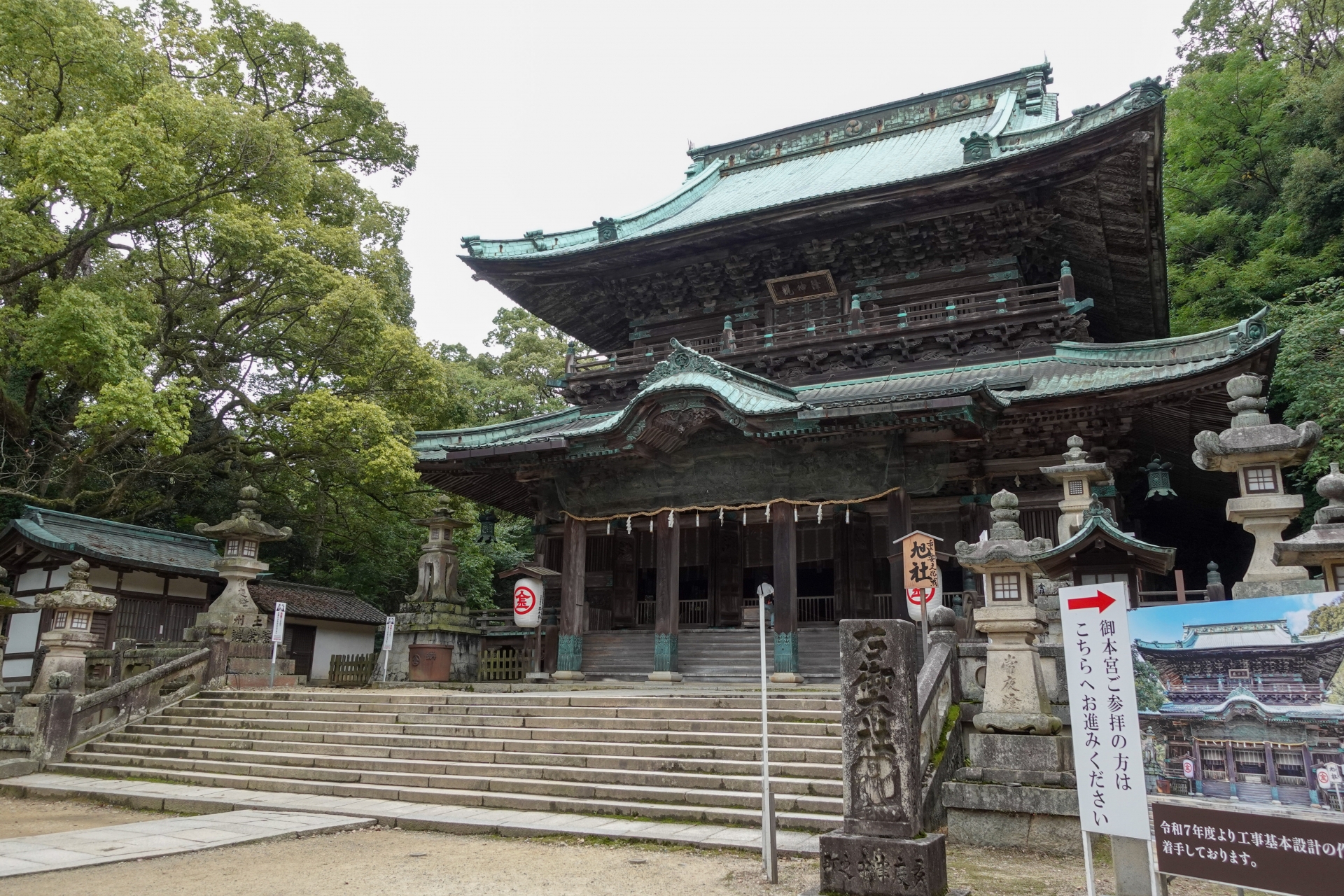
- Step 628: Asahi-sha (Important Cultural Property) — intricate carvings took 40 years to complete
- Step 785: Go-Hongu (Main Shrine) — panoramic views of the Sanuki Plain and Seto Inland Sea
- After descending: enjoy udon or browse souvenir shops along the approach
Course B: All the Way to the Inner Shrine (3.5–4 hours)
For repeat visitors with time and energy to spare. Reaching the inner shrine (Oku-sha / Igimi Jinja) completes the full pilgrimage circuit.
- Start at the approach entrance at 7:00–8:00 AM — mornings are cooler and quieter
- Reach Go-Hongu (785 steps) in approx. 40 min; take a short rest
- Continue another 583 steps to Oku-sha; the surroundings become more forested and atmospheric
- Arrive at Oku-sha (Igimi Jinja) — take in the quiet atmosphere before descending via the same route (approx. 1 hour down)
- After descending, eat and shop along the approach; consider heading to Takamatsu or an udon shop in the afternoon
Main Highlights Along the Route
Shrines and cultural treasures are scattered along the staircase. Take your time and enjoy each stop rather than rushing past them.
Omon (Main Gate): Step 365
The official main gate of Kotohira-gu, said to have been donated by Matsudaira Yorishige, the lord of the Takamatsu Domain. The upper section bears a plaque reading ‘Kotohira-yama’ (琴平山).
Asahi-sha: Step 628
An Important Cultural Property completed in 1845 (Koka 2), this structure took approximately 40 years to build. Its pillars and doors are covered in finely detailed carvings of figures, birds, animals, and plants. The light angle on descent gives it a different character than on the way up.
Go-Hongu (Main Shrine): Step 785
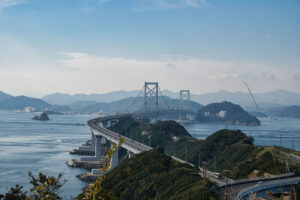
The main hall stands at an elevation of 251 meters (823 ft), built in the Taisha-kannagi style with a cypress bark roof. From the eastern viewing platform, the Sanuki Plain stretches out below, and on a clear day the Seto Ohashi Bridge is visible in the distance. The sense of openness at the top makes the climb feel worthwhile.
Oku-sha Inner Shrine (Igimi Jinja): Step 1,368
The innermost sanctuary, reached by climbing a further 583 steps beyond the main shrine. The deity enshrined here is Igimi-no-Mitama (to be verified). Unlike the busier main shrine, few visitors make it this far, and the atmosphere is quiet and deeply forested.
The prayer hall at Oku-sha is hung with numerous ema (votive plaques) depicting tengu (long-nosed goblins) and karasu tengu (crow goblins), giving the space a distinctive character (to be verified). The entrance is open, but access to the interior of shrine buildings may be restricted (to be verified).
Food and Souvenirs on the Approach
A sweet-savory aroma of soy sauce and sugar drifts through the approach, where souvenir shops and food stalls line the street. Worth a stop whether you visit before or after climbing.
- [Kompira Udon Honten] Sanuki udon served inside a registered historic building along the approach. A great post-climb lunch spot (hours to be verified)
- [Kyuman Honpo Isidanya] Famous for ‘kyuman’ — a thin-skinned steamed bun filled with sweet bean paste and mugwort. Affordable and ideal as a souvenir
- [Naniwado Mochiten] Popular for goshiki mochi (five-color rice cakes) and anko pie pastries. A good rest stop mid-climb
- [Shoyu-mame Honpo] ‘Kamatama soft serve’ — soft-serve ice cream inspired by kamatama udon — is one of the more popular street-food items here
Restaurants along the approach are busiest between mid-morning and midday. Arriving for an early lunch (11:00 AM – 12:00 PM) after descending helps avoid the worst of the wait.
Combining with the Kagawa Udon Pilgrimage
Kotohira-gu and the Kagawa udon shop circuit can be done in a single day. A morning shrine visit followed by afternoon udon touring is the most efficient approach.
- 7:00 AM – Start Course A (main shrine only) — early morning is quiet and cool
- 9:00 AM – Descend and enjoy kompira udon or kyuman along the approach
- 10:00 AM – Head to suburban udon shops by rental car or udon taxi
- 11:00 AM – Visit Yamakoshi Udon (Ayagawa; check hours/closures) or Gamo Udon (Sakaide; check hours/closures) (to be verified)
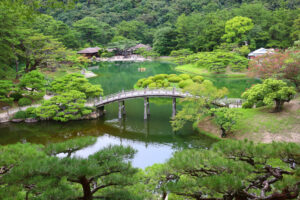
- 1:00 PM – Return to Takamatsu for additional udon shops or a visit to Ritsurin Garden
Tips Before You Visit
Comfort and safety vary considerably depending on what you wear, what time you arrive, and the season. Review these points before you go.
- [Footwear] Sneakers or walking shoes are essential. Heels and sandals are dangerous on the stone steps
- [Rain] Wet steps are extremely slippery. Walk slowly and use the handrails — this is especially important in bad weather
- [Crowds] Weekends, public holidays, Golden Week, and year-end are busy. Early weekday mornings (7:00–9:00 AM) are the calmest
- [What to bring] Carry water. Vending machines are available near the approach entrance and at a few points along the route (to be verified)
- [Palanquin service] This service was discontinued around 2020 (to be verified). If fitness is a concern, consider limiting your visit to the main shrine
- [Dogs] Dogs are permitted in outdoor areas along the approach and grounds, but not inside shrine buildings (to be verified)
- [Opening hours] Omon (Main Gate): 6:00 AM – 6:00 PM; Go-Hongu: 7:00 AM – 5:00 PM; Oku-sha: 9:00 AM – 4:30 PM (all to be verified)
Summary
Visiting the main shrine at 785 steps already delivers a full sense of accomplishment and a stunning view. Whether to push on to the inner shrine at 1,368 steps is a practical decision — weigh your fitness, time, and the weather on the day.
- Main shrine (Go-Hongu): 785 steps, approx. 1.5 hours round trip. Admission free throughout
- Inner shrine (Oku-sha): 1,368 steps, approx. 2.5–3 hours round trip. Worth attempting if you have the time and energy
- Sneakers are non-negotiable. Extra caution in wet conditions
- An early start (7:00–9:00 AM) avoids crowds and makes the climb more pleasant
- Finish by late morning and spend the afternoon on the Kagawa udon pilgrimage for an efficient full-day itinerary
- Always check the official website (konpira.or.jp) for current hours and any updates before your visit