
What You’ll Learn in This Article
- Ritsurin Garden is a Michelin Green Guide 3-star Japanese garden — one of the finest in the country
- Admission is just ¥500 (approx. USD 3.30), and it’s only 10 minutes from Takamatsu Station by train
- Highlights include Hiraiho viewpoint, Engetsu-kyo bridge, and matcha at Kikugetsu-tei tea house
- Early morning visits (opens as early as 5:30 AM in summer) and autumn foliage are especially rewarding
- Pairs well with Tamamo Park (Takamatsu Castle ruins) for a great half-day in the city
What Is Ritsurin Garden?
Ritsurin Garden (栗林公園, Ritsurin-koen) is a classical Japanese strolling garden in Takamatsu, Kagawa Prefecture. Designated a Special Place of Scenic Beauty — Japan’s highest cultural landscape status — in 1953, it earned a Michelin Green Guide 3-star rating in 2009.
Construction began in 1631 under the Ikoma clan, rulers of Sanuki Province. Over the following century, five successive lords of the Matsudaira clan (the Takamatsu domain) refined and expanded the garden into the masterpiece it is today.
The garden covers approximately 75 hectares (185 acres) in total, with the garden itself spanning 16.2 hectares — making it one of the largest gardens among Japan’s nationally designated cultural landscapes. Six ponds, thirteen sculpted hills, and Mt. Shiun rising behind the garden compose a landscape that has long been cited as the ideal of Japanese garden design.
Point
Michelin Green Guide’s 3-star rating means “worth a special journey” — the highest possible score. Ritsurin Garden is one of only a handful of Japanese gardens to receive this distinction.
Admission and Opening Hours
Admission is ¥500 for adults — exceptional value for a garden of this scale. The garden is open year-round, but opening times shift with the seasons, so check before you visit.
| Visitor Type | Admission Fee |
|---|---|
| Adult (high school age and above) | ¥500 (approx. USD 3.30) |
| Child (elementary and junior high school) | ¥170 (approx. USD 1.10) |
| Group adult (20+ people) | ¥400 |
| Group child (20+ people) | ¥140 |
| Annual pass (individual) | ¥3,180 |
Info
Free entry on January 1 (New Year’s Day) and March 16 (Garden Opening Anniversary). Expect larger crowds on these days.
| Month | Opens | Closes |
|---|---|---|
| January | 7:00 AM | 5:00 PM |
| February | 7:00 AM | 5:30 PM |
| March | 6:30 AM | 6:00 PM |
| April – May | 5:30 AM | 6:30 PM |
| June – August | 5:30 AM | 7:00 PM |
| September | 5:30 AM | 6:30 PM |
| October | 6:00 AM | 5:30 PM |
| November | 6:30 AM | 5:00 PM |
| December | 7:00 AM | 5:00 PM |
Getting There: From Takamatsu Station and the Airport
Ritsurin Garden is one of the most accessible major gardens in Japan — just 10 minutes from Takamatsu Station by local train. Direct airport buses also stop right at the garden entrance.
From Takamatsu Station (Train or Bus)
The fastest option is the JR Kotoku Line. From Takamatsu Station, ride to Ritsurin-koen Kitaguchi Station (6 minutes, ¥190), then walk 4 minutes to the North Gate.
| Option | Travel Time | Cost | Nearest Gate |
|---|---|---|---|
| JR Kotoku Line (Takamatsu → Ritsurin-koen Kitaguchi) | ~10 min (6 min train + 4 min walk) | ¥190 | North Gate |
| Kotoden Railway (Takamatsu-Chikko → Ritsurin-koen) | ~17 min (7 min train + 10 min walk) | ¥230 (to be verified) | East Gate |
| Local bus (from Takamatsu Stn / Chikko stop) | ~20 min | ~¥200 (to be verified) | Main entrance (1 min walk) |
From Takamatsu Airport
The Kotoden Bus airport limousine stops directly at Ritsurin Garden. No transfers needed — just board at the airport and ride for 23–28 minutes.
The bus stop is right at the garden entrance (1-minute walk). This makes it easy to stop at the garden immediately after landing — bags and all — before heading to your hotel.
By Car and Parking
Small parking lots are available at the East Gate and North Gate. Capacity is limited, so public transport is recommended on weekends and peak seasons.
- East Gate lot: 30 cars, 13 buses
- North Gate lot: 32 cars
- Parking fee: ¥100 per 25 minutes
Top 5 Spots Inside the Garden
The garden is divided into two areas: the South Garden (南庭, formal and refined) and the North Garden (北庭, more open and naturalistic). Here are the five spots that reward the most attention.
Hiraiho (飛来峰) — The Iconic Viewpoint
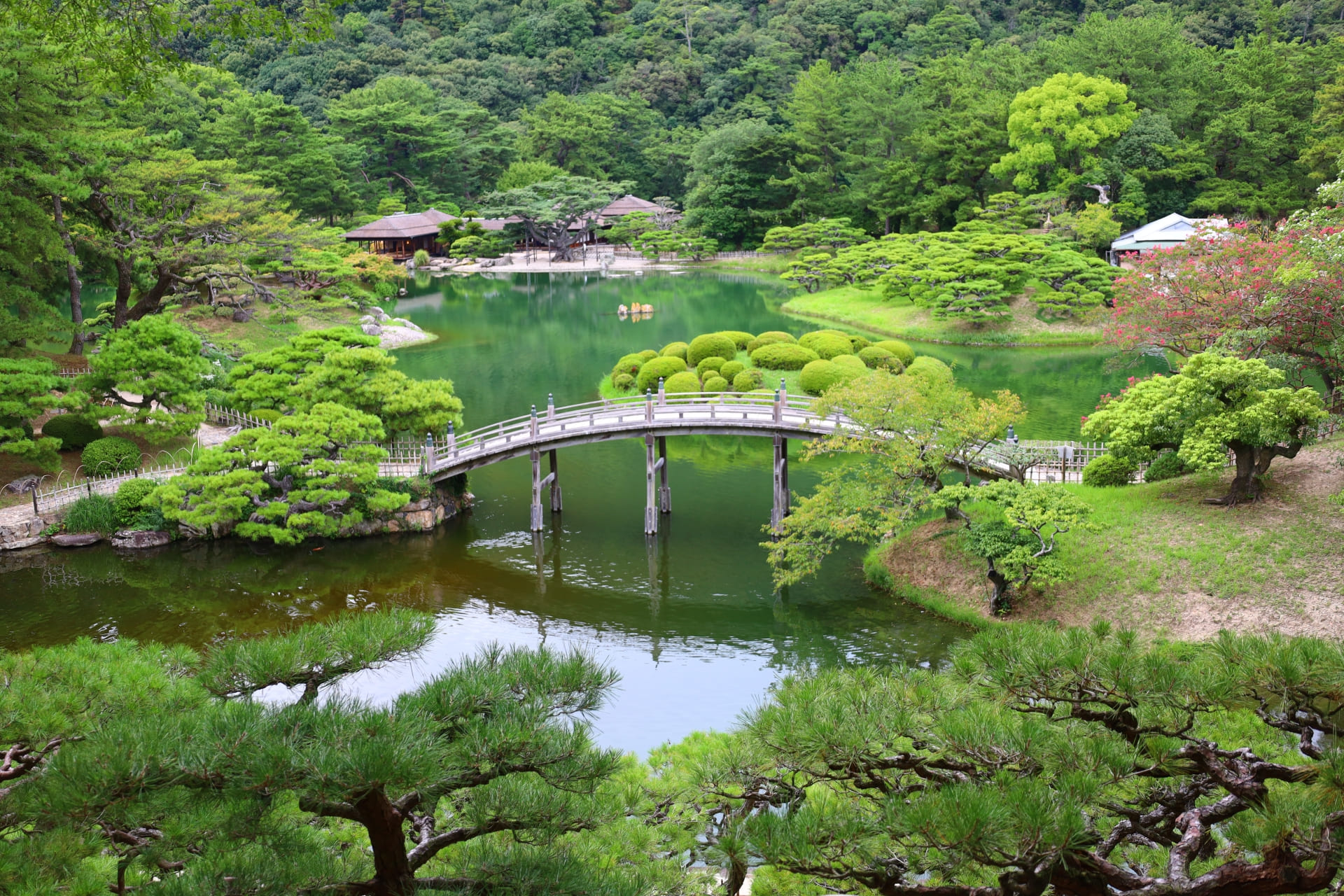
A small hill overlooking the South Pond — Ritsurin’s most photographed vantage point. The bridge, tea house, and Mt. Shiun all frame perfectly from here.
Arrive before 9:00 AM for the best light and calm water reflections. In the early morning, with few visitors around, the pond and mountain feel entirely yours.
Engetsu-kyo (偃月橋) — The Crescent Moon Bridge
An arched wooden bridge over the South Pond. Standing on it gives one of the garden’s best views: Kikugetsu-tei tea house and Mt. Shiun reflected in still water.
The arch reflects in the pond below like a full moon when the water is calm — best in the early morning before the wind picks up. This spot is also popular for kimono photo shoots (to be verified).
Kikugetsu-tei (掬月亭) — Matcha with a Garden View
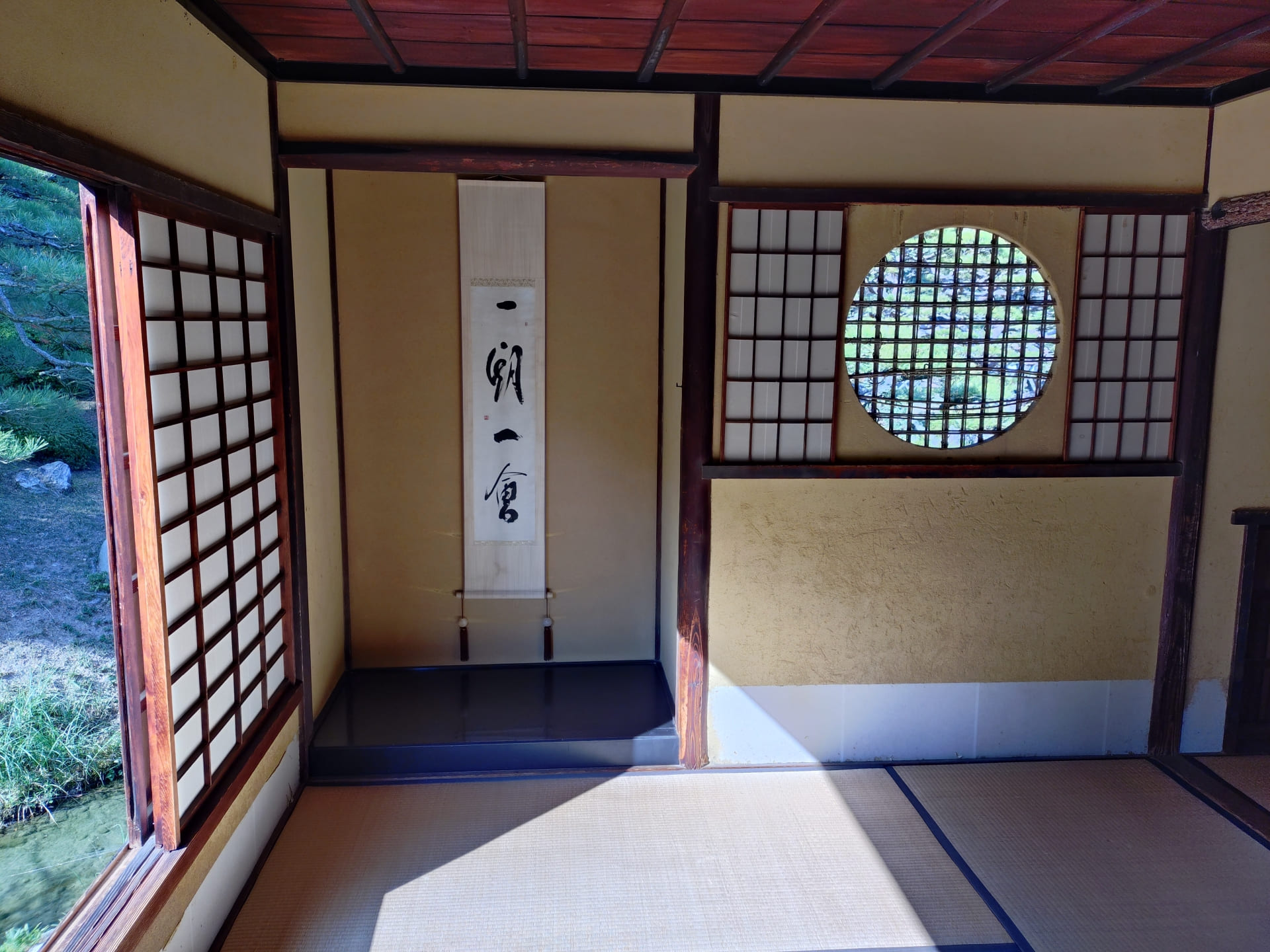
A sukiya-style tea house (traditional Japanese tea architecture) built in the early Edo period. Sit on the wooden veranda facing the South Pond and enjoy matcha with a Japanese sweet.
| Item | Price |
|---|---|
| Matcha (with Japanese sweet) | ¥700–800 (approx. USD 5) |
| Sencha green tea (with Japanese sweet) | ¥600 (approx. USD 4) |
Open 9:00 AM–4:30 PM, last entry 4:00 PM (to be verified). The veranda looks straight across the pond to Mt. Shiun — a natural pause point after walking the south circuit.
Hanazono-tei (花園亭) — Morning Rice Porridge
A rest pavilion on the North Pond shore. Starting at 7:00 AM, it serves okayu (Japanese rice porridge) — a peaceful way to start the day while the garden is still quiet.
Prices start from ¥1,300 (to be verified). Sitting beside the water with a warm bowl of porridge in the early morning light is an experience you simply can’t have in the afternoon.
Shoko Shorei-kan — History, Crafts, and Café
A Meiji-era building (built 1899) housing garden history exhibits, Kagawa traditional craft demonstrations and sales, and a garden-view café.
On the second floor, you’ll find furniture by George Nakashima — a Japanese-American designer celebrated worldwide — displayed alongside the garden’s Edo-period heritage. The veranda overlooks the South Garden and is worth a look even if you skip the café.
Best Time to Visit
Ritsurin Garden is beautiful in every season, but spring cherry blossoms and autumn foliage draw the largest crowds for good reason. To avoid them, arrive on a weekday morning.
| Season | What to See | Crowd Level |
|---|---|---|
| Spring (Mar–Apr) | ~300 cherry trees in bloom across the garden | High (especially weekends) |
| Summer (Jun–Aug) | Dense greenery; morning mist over the ponds | Moderate |
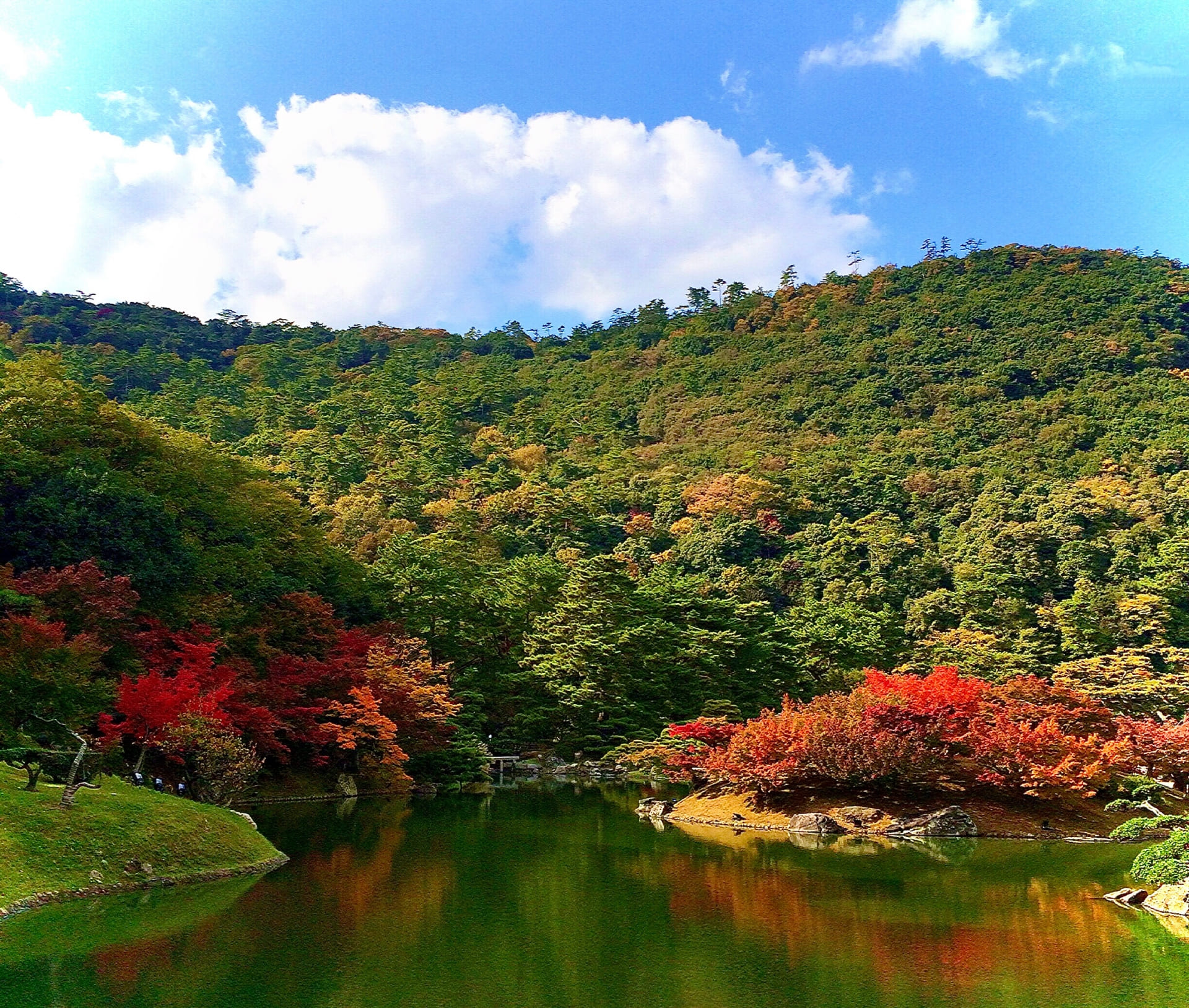
| Autumn (Oct–Nov) | Vivid foliage; fallen leaves carpeting the paths | High (especially November) |
| Winter (Dec–Feb) | Quiet and uncrowded; bare branches over still water | Low |
Point
Weekday mornings (from opening until 9:00 AM) offer the garden at its quietest, with mirror-like water reflections. In summer, gates open at 5:30 AM — early enough for a full walk before breakfast.
Plan for 60 minutes to cover the South Garden, or 1.5–2 hours for both South and North Gardens. Add time for the tea house and Shoko Shorei-kan and you’re looking at 2+ hours total.
Where to Stay and What to Do Nearby
Ritsurin Garden fits easily into a half-day, leaving time for more of Takamatsu. The city also makes a solid base for exploring the rest of Kagawa or Shikoku.
Combining with Tamamo Park (Takamatsu Castle)
Takamatsu Castle is one of Japan’s three great “water castles” — its moat was filled with seawater from the Seto Inland Sea. A short train ride from Ritsurin Garden brings you right to the castle ruins.
- Ritsurin Garden (1.5–2 hrs) → JR train toward Takamatsu Station
- Tamamo Park / Takamatsu Castle ruins (1–2 hrs) → see Important Cultural Properties including the Ushitora and Tsukimi turrets
- Sunport Takamatsu (evening stroll / dinner) → shopping and restaurants around the Symbol Tower
Info
Showing your Tamamo Park ticket at Ritsurin Garden reportedly gets you a discount on admission — visit Tamamo Park first (to be verified).
Takamatsu is also the home of Sanuki udon (thick wheat noodles, a Kagawa specialty). Many visitors finish the day with a bowl at one of the city’s renowned noodle shops — a fitting end to a day of gardens and castles.
Summary
Ritsurin Garden is one of Japan’s most rewarding garden experiences — and at ¥500 admission, one of its best-value ones. Whether you visit at dawn in summer or under autumn leaves, the garden consistently delivers.
- Admission: ¥500 adults (¥170 children), open year-round
- Access: ~10 minutes from Takamatsu Station by JR Kotoku Line
- Highlights: Hiraiho viewpoint, Engetsu-kyo bridge, matcha at Kikugetsu-tei (¥700–800)
- Best times: Spring cherry blossoms (Mar–Apr) and autumn foliage (Oct–Nov); early weekday mornings for quieter visits
- Pairs well with Tamamo Park / Takamatsu Castle for a complete half-day in the city